


Scientists Reveal The Most Crash-Proof Drone Ever: Revolutionary Design Inspired By Nature’s Ultimate Survivor
 By
Gabriel Cruz
By
Gabriel Cruz
| IN A NUTSHELL |
|
Drones have become an integral part of modern technology, serving various purposes from aerial photography to surveying and even package delivery. However, their vulnerability to collisions remains a significant challenge, especially for fixed-wing variants. Inspired by the woodpecker’s unique anatomical resilience, scientists have developed a groundbreaking drone design that promises enhanced crash resistance. This innovative approach could revolutionize the future of drone technology, providing a more robust solution for various applications.
Woodpecker Biology: A Model for Resilience
Woodpeckers are remarkable creatures that can withstand repeated high-impact forces without suffering brain damage. Their skulls are composed of several specialized structures that collectively absorb and redirect impact energy. The rigid beak, flexible hyoid bone, and spongy bone layer work together to protect the brain. Additionally, the space around the brain allows for energy dispersion, preventing injury.
This natural architecture has inspired scientists to replicate similar mechanisms in drones. By understanding how woodpeckers manage shock absorption, researchers at EPFL Switzerland have designed the SWIFT drone, which incorporates these biological principles. The goal is to create a drone capable of surviving collisions without sustaining damage, thus enhancing its operational viability.
Innovative Design of the SWIFT Drone
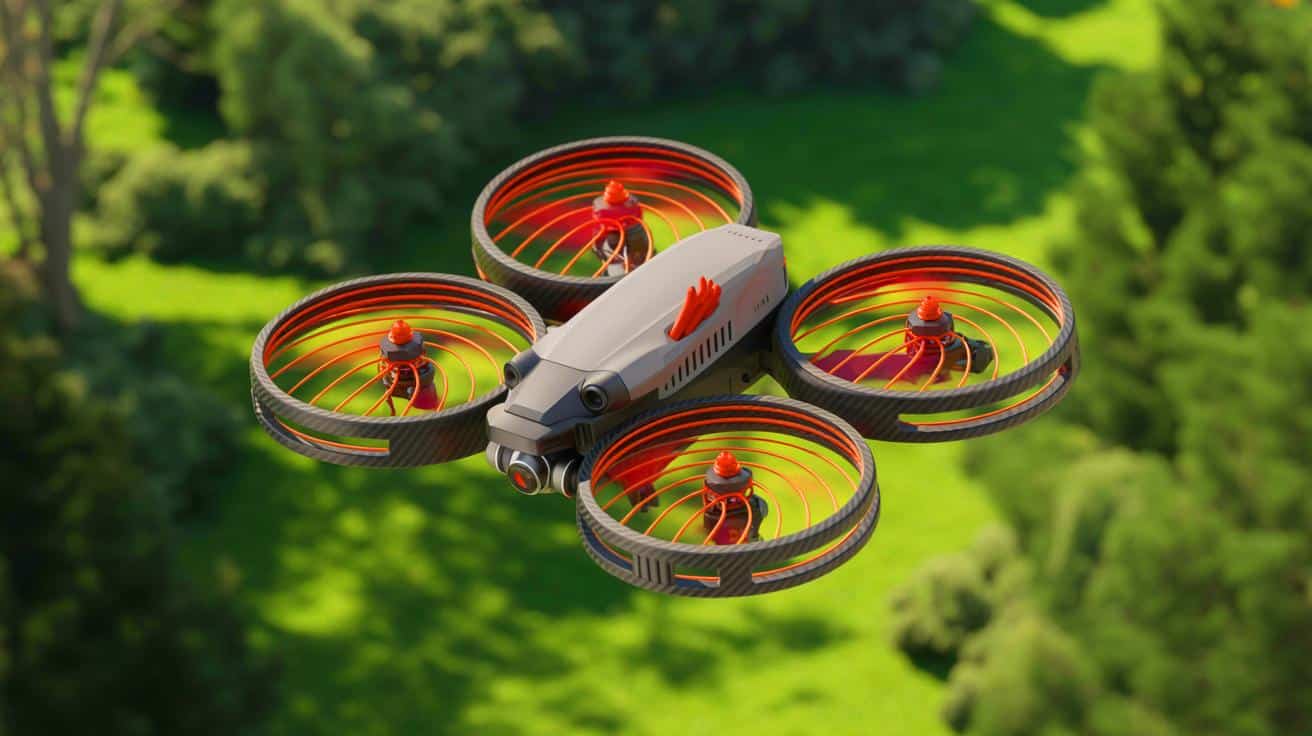
The SWIFT drone, short for “Shockproof Woodpecker-Inspired Flying Tensegrity,” leverages tensegrity structures to absorb impact energy. Tensegrity refers to systems composed of rigid components held together by flexible cables, which allow for energy absorption and dissipation. In the SWIFT drone, carbon fiber rods, strips, and plates mimic the woodpecker’s beak, hyoid bone, and skull, respectively.
Electronic components within the drone are suspended by rubber cables, providing them with the flexibility to move upon impact. This design allows the internal components to travel nearly 9 inches, minimizing the risk of damage. By integrating these elements, the SWIFT drone can endure impacts that would typically incapacitate conventional drones, marking a significant advancement in drone technology.
Enhancements to Drone Wing Design
Beyond the central body, the SWIFT drone’s wings also benefit from woodpecker-inspired enhancements. Birds, including woodpeckers, utilize a network of soft connective tissues in their shoulders to absorb collision forces. This biological feature is mirrored in the SWIFT drone through a combination of elastic cables and carbon fiber rods connecting the wings to the main fuselage.
This arrangement not only prevents the wings from detaching during collisions but also protects the electronic components housed in the drone’s main body. The dual tensegrity system effectively reduces impact force by up to 70% compared to similar drones, demonstrating its potential for broader application in the field of unmanned aerial vehicles (UAVs).
Implications for the Future of Drone Technology
The development of the SWIFT drone represents a significant step forward in creating more resilient UAVs. By adopting nature-inspired designs, engineers can overcome traditional challenges associated with fixed-wing drones, such as vulnerability to crashes. This innovation could lead to broader adoption of drones in industries where reliability and durability are crucial.
The ability to withstand collisions without sustaining damage extends the operational lifespan of drones, reducing maintenance costs and downtime. As researchers continue to refine these designs, the potential applications for such resilient drones are vast, ranging from search and rescue operations to environmental monitoring and beyond.
As technology continues to evolve, the integration of natural design principles into modern engineering could yield even more groundbreaking innovations. How might other aspects of nature inspire the next generation of technological advancements?
Continue reading