


Close Menu
  • Top Stories
  • News
  • Entertainment
  • Health
  • Home
  • Money
  • Sports
  • Tech
  • Transportation
  • Travel
  • About us
  • Advertising
  • Contact
Trending
How turboprops help reduce airport congestion
Illustration of the flu virus engaging in cellular invasion as observed through advanced ViViD-AFM microscopy.
Microscope Breakthrough Unveils Real-Time Flu Virus Invasion, Offering New Insights Into Disease Prevention and Control
Illustration of a microneedle-based sensor assessing fish freshness.
New Sensor Revolutionizes Fish Freshness Checks with Microneedles, Enhancing Safety and Trust in Seafood Consumption
Facebook X (Twitter) RSS
Fylladey
Facebook X (Twitter) RSS
  • Entertainment
  • Health
  • Home
  • Money
  • News
  • Sports
  • Tech
  • Top Stories
  • Transportation
  • Travel
Fylladey

The New Breath Sensor Stuns Scientists: “This Device Revolutionizes” Diabetes Diagnosis with Unprecedented Ease

A groundbreaking breath-based sensor developed by Penn State researchers promises to revolutionize diabetes diagnosis by offering a quick, non-invasive method that detects the disease through elevated acetone levels in the breath, potentially impacting millions of undiagnosed individuals.
Noah BennettBy Noah Bennett08/31/20259
Share Twitter Facebook LinkedIn WhatsApp Email Copy Link
Follow Us
Google News
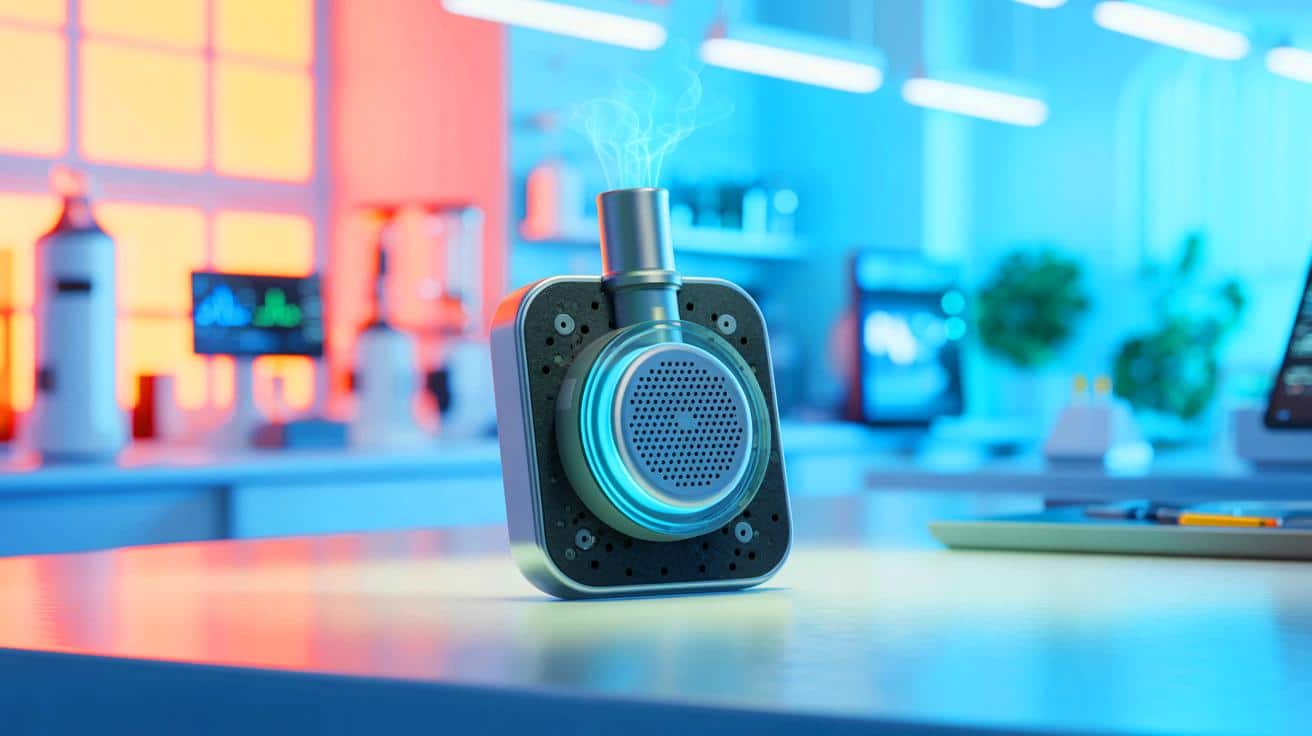
Illustration of a breath-based sensor developed by Penn State researchers for non-invasive diabetes diagnosis.
Share
Twitter Facebook LinkedIn WhatsApp Email Copy Link
IN A NUTSHELL
  • 🔬 Researchers at Penn State have developed a new breath-based sensor to diagnose diabetes non-invasively.
  • 💨 The sensor detects elevated levels of acetone in the breath, indicating diabetes or prediabetes.
  • 🛠️ The device is crafted by converting polyimide film into porous graphene using a laser.
  • 🌟 This innovation could extend beyond diabetes, offering broader health monitoring applications.

Innovations in medical diagnostics are continuously evolving, offering promising solutions for managing diseases like diabetes. Researchers at Penn State have developed a new breath-based sensor that could revolutionize how diabetes is diagnosed. This sensor, crafted by converting polyimide film into porous graphene, offers a non-invasive, quick, and potentially life-changing method of diagnosis. With millions of Americans affected by diabetes, many of whom are unaware of their condition, such advancements could significantly impact public health. As research continues, the potential for this sensor to extend beyond diabetes diagnostics could mark a significant milestone in personalized healthcare.

The Growing Need for Non-Invasive Diabetes Testing

Diabetes remains a major public health challenge in the United States, affecting approximately 38 million people. Alarmingly, the Centers for Disease Control and Prevention (CDC) reports that one in five individuals with diabetes are unaware of their condition. Additionally, prediabetes is a silent precursor that often goes undetected, with eight in ten affected individuals being unaware. Early detection is crucial, as it allows for timely lifestyle interventions that can prevent or delay the onset of diabetes.

Traditional diagnostic methods primarily involve blood tests, which can be cumbersome and inconvenient. Patients often have to fast overnight and visit healthcare facilities for testing. While non-invasive testing methods, like those measuring glucose in sweat, have been explored, they have yet to reach the market due to practical challenges, such as the need for induced sweating. The demand for a simple, painless, and efficient testing method is evident, and Penn State’s breath-based sensor could be the answer.

The role of technology in personal finance management

How the Breath-Based Sensor Works

At the heart of this new diagnostic method is the detection of acetone in the breath. Acetone is a chemical produced by the body when it burns fat. Elevated levels of acetone, specifically above 1.8 parts per million, can indicate diabetes. The sensor developed by Penn State researchers is designed to accurately detect these levels, offering a reliable diagnostic tool.

The creation of this sensor involves an innovative process where a carbon-dioxide laser is used to transform a sheet of polyimide film into porous graphene. Lead researcher Huanyu “Larry” Cheng describes this process as similar to “toasting bread to carbon black if toasted too long.” By adjusting the laser’s power and speed, the polyimide is converted into few-layered, porous graphene, capable of capturing acetone molecules effectively.

The best sports for improving fitness levels

The Science Behind the Sensor’s Sensitivity

The sensor’s ability to detect acetone with high sensitivity is achieved by combining the porous graphene with a molecular sieve made of zinc oxide. This combination ensures that the sensor is selective enough to capture acetone molecules while a membrane blocks water molecules, which are also present in the breath. The end product is a thin strip that can detect both diabetes and prediabetes. Notably, the sensor is reusable after a brief resting period of just 23 seconds.

Currently, the testing process requires patients to exhale into a bag, but the research team is working on integrating the sensor into more convenient formats. These could include positioning the sensor beneath the nose or embedding it into a mask. Such adaptations would enhance the ease of use and accessibility of the test, making it more practical for everyday application.

How technology is changing the landscape of sports

Beyond Diabetes: Expanding Health Applications

While the primary focus of the sensor is to facilitate diabetes diagnosis, its potential extends beyond this singular application. According to Cheng, understanding how acetone levels change with diet and exercise could provide valuable insights into broader health applications. Much like glucose monitoring, tracking acetone fluctuations could offer an exciting opportunity for personalized health management.

The potential for such a sensor to become a valuable diagnostic tool for various health conditions is significant. As research progresses, the ability to monitor breath acetone could transform how individuals manage their health, offering a non-invasive and accessible method for tracking metabolic changes over time.

The introduction of Penn State’s breath-based sensor marks a significant advancement in non-invasive medical diagnostics. By providing a quick, painless, and reliable method for detecting diabetes, this innovation holds the potential to improve early diagnosis and intervention significantly. As the research team continues to refine the sensor and explore its broader applications, one cannot help but wonder: How might such technologies further transform healthcare and our understanding of metabolic health in the future?

This article is based on verified sources and supported by editorial technologies.
Diabetes Research Health Innovation Medical Technology
Follow on Google News Follow on X (Twitter)
Share. Twitter LinkedIn Facebook WhatsApp Email Copy Link
Previous Article“Angry Citizens Demand Action”: This New Electric Outboard Motor Sparks Government Tensions Over Environmental Concerns
Next Article The Tiny House Revolution: “I Finally Feel Free” as a Single-Floor Haven Beckons Retirees to Simplify Life
Noah Bennett
  • X (Twitter)

Noah Bennett, a Los Angeles-based journalist for Fylladey.com, reports on technology, online culture, and the environment. Trained at UBC’s School of Journalism, his stories capture how digital tools and media trends are reshaping everyday experiences. Contact: [email protected]

A lire également
Illustration of the flu virus engaging in cellular invasion as observed through advanced ViViD-AFM microscopy.

Microscope Breakthrough Unveils Real-Time Flu Virus Invasion, Offering New Insights Into Disease Prevention and Control

Illustration of the interaction between human gut cells and newly discovered gut viruses.

“This Changes Everything”: Activating New Gut Viruses Reveals Untapped Health Secrets (And It’s Already Inside You)

Illustration of the impact of a father's COVID-19 infection on offspring anxiety through changes in sperm.

“This Changes Everything”: Father’s COVID Infection Secretly Impacts Your Child’s Anxiety (And It’s Closer Than You Think)

Illustration of calcium supplements and their role in bone health and dementia risk.

“Did They Lie About Calcium?”: Supplements Safe for Older Women, Don’t Increase Dementia Risk (It’s Not What You Think)

View 9 Comments
9 Comments
  1. nadine on 08/31/2025 5:55 AM

    Wow, this breath sensor sounds like a game-changer for diabetes diagnosis! Is it already available on the market? 🧐

    Reply
  2. yusuffate7 on 08/31/2025 6:29 AM

    Does anyone else think this sounds too good to be true? How accurate can a breath test really be?

    Reply
  3. Philip_star on 08/31/2025 7:04 AM

    Thank you, Penn State researchers, for making healthcare more accessible! 😊

    Reply
  4. Omarwarrior on 08/31/2025 7:37 AM

    Are there any side effects to using this sensor?

    Reply
  5. John-Michaelorigami on 08/31/2025 8:11 AM

    Finally, a non-invasive way to diagnose diabetes! Can’t wait to try it out. 🎉

    Reply
  6. arnoldthunder8 on 08/31/2025 8:46 AM

    How does this sensor compare to traditional blood tests in terms of reliability?

    Reply
  7. Jack on 08/31/2025 9:20 AM

    Can the device be used at home, or does it require a medical professional to operate?

    Reply
  8. carla_saber on 08/31/2025 9:53 AM

    Sounds promising, but what about the cost? Is it affordable for the average person?

    Reply
  9. William2 on 08/31/2025 10:27 AM

    Just read about the sensor, and I am thrilled! What an innovative solution! 🌟

    Reply
Leave A Reply Cancel Reply

Trending
How turboprops help reduce airport congestion
Illustration of the flu virus engaging in cellular invasion as observed through advanced ViViD-AFM microscopy.
Microscope Breakthrough Unveils Real-Time Flu Virus Invasion, Offering New Insights Into Disease Prevention and Control
Illustration of a microneedle-based sensor assessing fish freshness.
New Sensor Revolutionizes Fish Freshness Checks with Microneedles, Enhancing Safety and Trust in Seafood Consumption
News by category
  • Entertainment
  • Health
  • Home
  • Money
  • News
  • Sports
  • Tech
  • Top Stories
  • Transportation
  • Travel
Information
  • About us
  • Advertising
  • The editorial team
  • Contact
  • Legal Information
  • Privacy and Cookie Policy
About

Fylladey.com brings clarity to everyday complexity. Covering news, tech, health, finance, sports, travel, and more, the platform helps readers make sense of a fast-moving world. With insightful coverage and accessible content, it’s a daily guide to the topics that shape our lives, our choices, and our understanding of today.

Facebook X (Twitter)
Facebook X (Twitter) RSS
  • About us
  • Advertising
  • The editorial team
  • Contact
  • Legal Information
  • Privacy and Cookie Policy
© Fylladey.com. All rights reserved.

Type above and press Enter to search. Press Esc to cancel.