



“This Hidden Trick”: Transform Your Old Speakers Instantly and Experience Mind-Blowing Sound Without Spending Hundreds
 By
Priya Venkataraman
By
Priya Venkataraman
| IN A NUTSHELL |
|
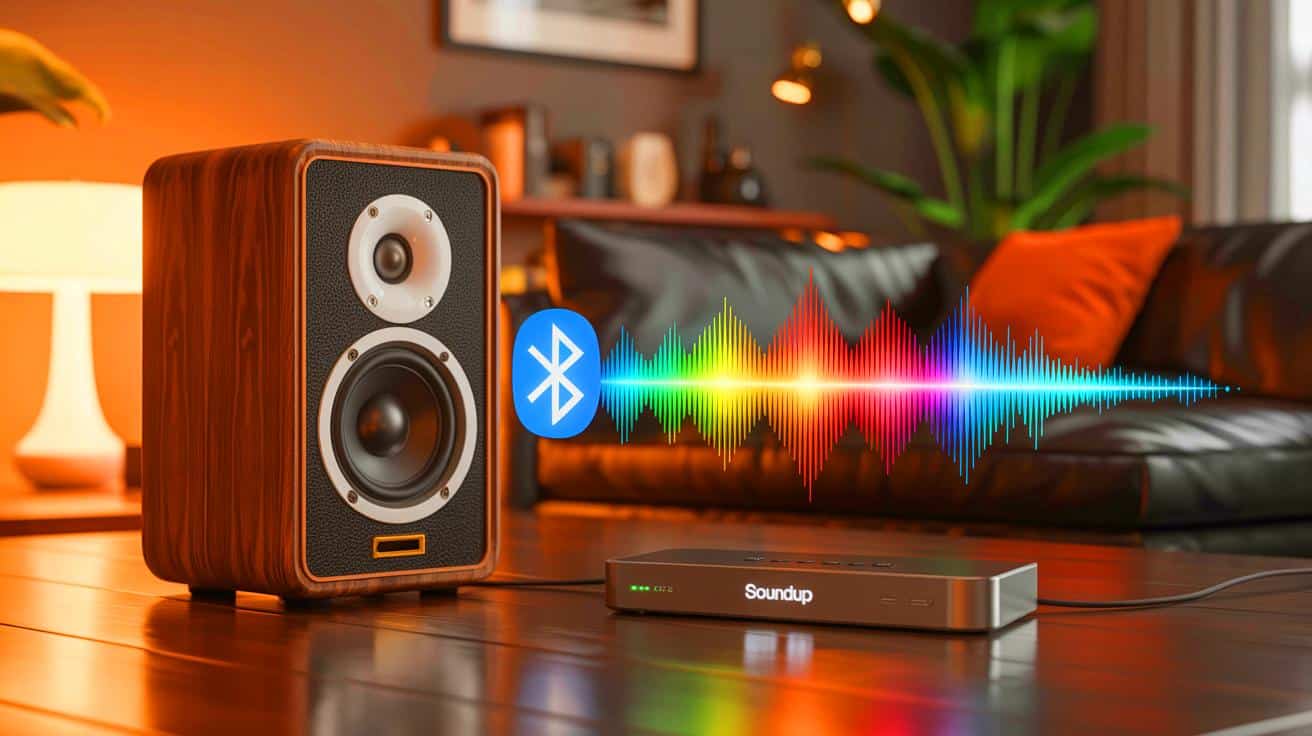
In an era where technological innovation often means the latest gadget is the best, a Danish company called LastObject is challenging this notion. Their latest creation, SoundUp, is a device designed to breathe new life into vintage speakers by converting them into Bluetooth-compatible audio equipment. This small, yet powerful device hopes to transform old high-end speakers, which might otherwise gather dust, into modern sound systems. As the subject of a Kickstarter campaign, SoundUp is attracting attention for its ability to marry the quality of classic speakers with today’s wireless convenience, all without the need for cumbersome cords or expensive upgrades.
Reviving Vintage Speakers
SoundUp offers a solution for those who appreciate the sound quality of vintage speakers but want the convenience of modern technology. Many music enthusiasts find themselves with high-quality, wooden-bodied passive speakers that are no longer used because they lack Bluetooth capability. These older models, often available at bargain prices, can outperform many of today’s cheaply made plastic speakers. By using SoundUp, buyers can connect these vintage treasures to their smartphones wirelessly.
The device is equipped with a Class-5 100W amplifier, a 108-Wh lithium battery, and Bluetooth 5.1 module. This technology allows it to communicate seamlessly with a user’s smartphone music library. The design is straightforward: a speaker cable clips into the SoundUp and the vintage speaker, providing both audio and power without needing a wall outlet. This setup not only revives old speakers but does so with minimal hassle.
The Technical Specs of SoundUp
Understanding the technical capabilities of SoundUp reveals why it is suitable for a variety of vintage speakers. The device can deliver up to 100 watts of peak power, though in real-world use, it’s typically between 50 and 90 watts. This output is safe for most 3- to 8-ohm vintage hi-fi or bookshelf passive speakers, making it a versatile choice for different audio setups.
One charge of SoundUp’s battery lasts for about 40 hours at mid-volume or seven hours at full volume, making it ideal for extended listening sessions. Users can choose to connect a single SoundUp to one speaker for mono playback. Alternatively, for a richer sound experience, two devices can be linked to separate speakers for stereo playback. This pairing feature is automatic, further simplifying the user experience.
Cost and Accessibility
LastObject’s Kickstarter campaign offers early adopters a chance to purchase SoundUp at a significant discount. A pledge of approximately $158 gets backers one device, while $269 secures two. These prices reflect a 21% to 33% discount off the expected retail prices. This affordability makes SoundUp an attractive option for those looking to enhance their audio equipment without breaking the bank.
For many, the decision to invest in SoundUp is about more than cost savings. It’s an opportunity to blend the nostalgic charm of vintage speakers with the practicality of wireless technology. In an age where sustainability is increasingly important, repurposing rather than discarding quality products aligns with eco-friendly values. SoundUp encourages consumers to rethink how they approach technology upgrades.
Market Potential and Future Implications
SoundUp could potentially influence the market for audio equipment, encouraging more companies to develop products that modernize existing technology. This approach not only makes financial sense but also addresses environmental concerns associated with electronic waste. By extending the life of existing products, companies like LastObject can help reduce the demand for new materials and the energy required to produce them.
The device also highlights a growing trend among consumers who value quality and sustainability over novelty. As more people seek out ways to integrate old and new technologies, products like SoundUp could become increasingly popular. This shift could drive innovation in other areas of consumer electronics, leading to more sustainable and versatile solutions.
As SoundUp continues to gain traction, it raises important questions about the future of audio technology and consumer habits. Will more consumers choose to rejuvenate older technology, or will the allure of new devices always win out? As we consider these possibilities, one thing is clear: the relationship between technology and sustainability is an area ripe for exploration and innovation.
Continue reading