



This Implant ‘Offers Hope’ for Transforming Corneal Blindness Treatment and Restoring Sight to Millions Worldwide
 By
Noah Bennett
By
Noah Bennett
| IN A NUTSHELL |
|
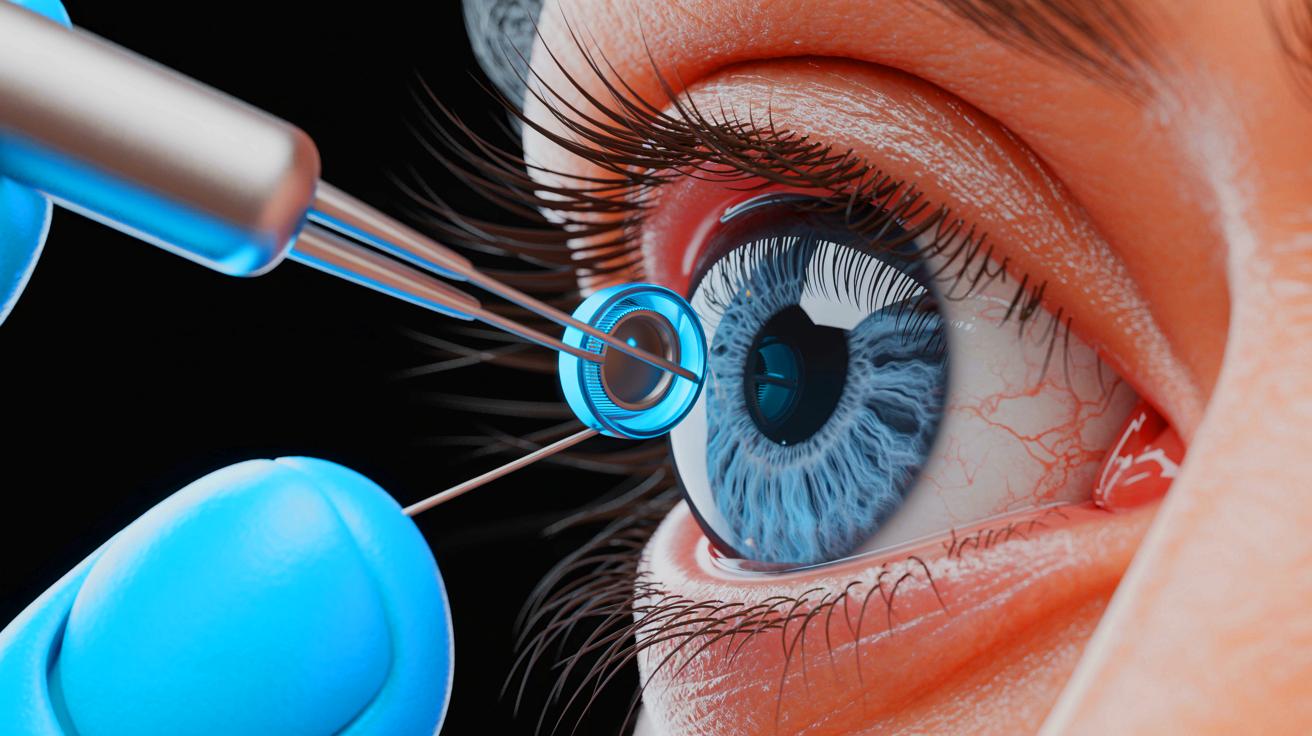
A groundbreaking innovation in the field of ophthalmology may soon offer a lifeline to millions suffering from corneal blindness. A new implant developed by the Dubai-based company Xpanceo, in collaboration with the Italian startup Intra-Ker, aims to bypass damaged corneas entirely. Instead of relying on donor tissue, this technology projects images directly onto the retina, offering a promising alternative for those who remain legally blind despite traditional corneal transplants. With human trials expected to commence within two years, this development could revolutionize vision care and offer hope to over 12 million individuals awaiting corneal transplants globally.
The Limitations of Traditional Corneal Transplants
The cornea is the most frequently transplanted human tissue. For those afflicted with corneal blindness, the transplantation of donor tissue has been the primary option for regaining sight. However, even when transplants happen, many patients continue to live with significant vision impairment. This is due to several factors, including the availability of donor tissue and the body’s potential rejection of the transplant.
Corneal blindness affects millions worldwide, yet only 185,000 corneal transplants are performed each year. This stark discrepancy highlights the pressing need for innovative solutions that do not depend on donor tissue. The traditional approach also involves complex surgical procedures and lengthy recovery times, adding to the challenges faced by patients.
With the introduction of the intracorneal implant, Xpanceo and Intra-Ker aim to circumvent these limitations. By projecting images directly to the retina, their technology could provide a viable alternative that is not only more accessible but also less invasive than traditional methods.
How the Intracorneal Implant Works
The innovative implant reimagines the problem of corneal blindness as one of data delivery rather than biological repair. Normally, light passes through the cornea to reach the retina, where the visual signal is then transmitted to the brain. However, if the cornea is damaged, this process is disrupted, leading to impaired vision.
The new system employs external smart glasses equipped with a camera to capture the visual scene. This data is wirelessly transmitted to a microdisplay implanted in the eye, which then beams the images directly to the retina. The microdisplay, measuring just 450×450 pixels, is sealed inside the eye, bypassing the need for a healthy cornea.
Professor Massimo Busin, President and CEO of Intra-Ker, emphasized the significance of this advancement, stating that previous attempts to implant electronics in the eye’s anterior segment have not succeeded. With their IP-protected technology, the implantation of sealed electronic components becomes a safe and precise procedure, comparable in complexity to standard corneal surgery.
Challenges and Future Prospects
While the initial proof of concept has shown promise, several challenges remain. The current prototype combines a 450×450 pixel display with micro-optical projection in a 5.6-mm package. The goal for clinical use is to further miniaturize the system, enhancing its practicality and comfort for patients.
Human trials are anticipated to begin within two years, with a projected market value of $50 million to $200 million annually. If successful, this technology could offer newfound independence to millions of individuals who are currently excluded from donor-based sight restoration solutions.
Despite the optimism surrounding this innovation, it is essential to consider the potential hurdles. Regulatory approvals, manufacturing scalability, and patient adaptation are just a few of the factors that will determine the implant’s success in the real world. Nonetheless, the potential impact on global vision care is immense, setting the stage for a new era in ophthalmology.
Childhood Verbal Abuse ‘Ruins Lives Forever’ Says Study That Shocks Millions Across America
A Glimpse Into a New Era of Vision Care
Dr. Valentyn Volkov, founder of Xpanceo, views this breakthrough as the dawn of a new era in vision care. By bridging longstanding gaps through advanced optics and computation, the implant represents a significant leap forward. It offers an engineered alternative to one of the world’s most common causes of blindness, potentially transforming the lives of millions.
The collaboration between Xpanceo and Intra-Ker exemplifies the power of international partnerships in advancing medical technology. Their combined expertise and innovation have led to the first successful proof of concept for an intracorneal implant, paving the way for future developments in the field.
As research continues and human trials approach, the world watches with anticipation. The success of this implant could redefine the landscape of vision care, offering new hope to those living with corneal blindness. However, the journey is just beginning, and the coming years will be crucial in determining the ultimate impact of this pioneering technology.
The potential of this intracorneal implant to alter the course of vision care is undeniable. With human trials on the horizon and significant interest from the medical community, the future looks promising. Yet, as with any groundbreaking innovation, numerous questions remain. How will this technology be received by patients and healthcare providers? Will it be accessible to those in need across different regions and socioeconomic backgrounds? The answers to these questions will shape the future of vision care and determine the true impact of this remarkable development.
Continue reading