



“Is This the Future of Mobility?”: Wearable Exo Motor Unleashes Shocking Power (And It’s More Than an E-Bike)
 By
Noah Bennett
By
Noah Bennett
| IN A NUTSHELL |
|
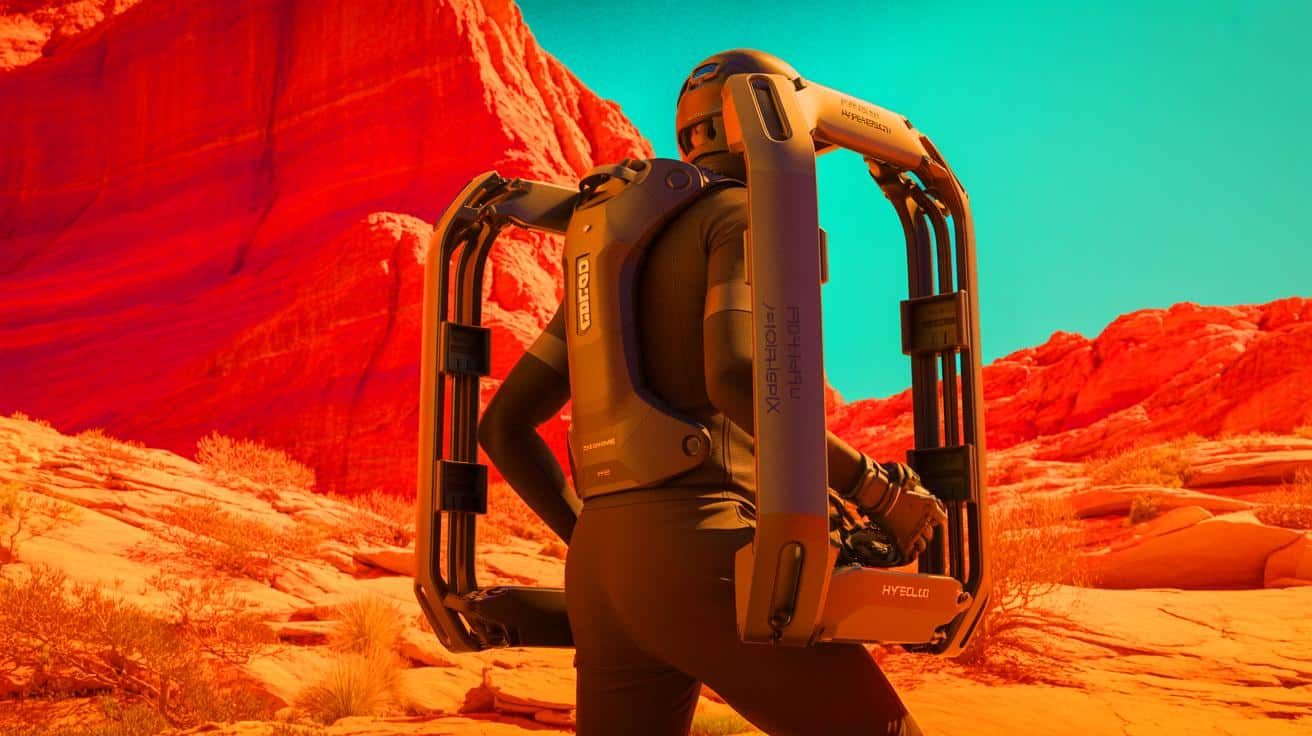
In recent years, the landscape of personal mobility technology has seen significant advancements, particularly in the realm of wearable exoskeletons. Among these innovations, Hypershell’s latest offering, the X Ultra performance exoskeleton, stands out. Designed to enhance human movement across various terrains, this exoskeleton promises to extend the boundaries of physical exploration. With a powerful motor and advanced features, the X Ultra aims to redefine what is possible in outdoor adventures. However, it also raises questions about the balance between technological assistance and physical effort. As we delve into the details of this innovation, we explore its implications for adventurers and the broader context of assistive technology.
Enhancing Human Performance: The X Ultra’s Capabilities
The Hypershell X Ultra exoskeleton is engineered to amplify human capabilities in outdoor environments. At the core of this device is a high-efficiency motor that delivers 1,000 watts of power, a 25% increase from previous models. This substantial boost allows users to hike, run, and cycle with less fatigue, covering distances of up to 40 miles per battery charge. Such improvements are vital for those looking to undertake longer and more strenuous adventures without succumbing to exhaustion.
This power boost does not merely serve as an easy way out for users. Instead, it provides an opportunity to push further and explore more challenging terrains. Hypershell envisions its users embarking on more ambitious journeys, utilizing the exoskeleton to transcend their physical limitations while still engaging in rigorous physical activity. This perspective challenges the notion that assistive technology inherently diminishes the value of human effort.
Technological Advancements: From Motor Efficiency to User Profiles
The X Ultra incorporates several technological enhancements that optimize its performance. The introduction of a new thermal management system ensures efficient cooling, while advanced winding technology contributes to weight savings, maintaining power and reliability. These upgrades collectively enhance the user experience, allowing for more extended and comfortable use.
Moreover, the exoskeleton features AI-powered profiles tailored to specific activities and conditions. With 12 activity-targeted options, including new Dune and Snow modes, users can fine-tune the device’s output for optimal performance in diverse environments. These profiles not only enhance the exoskeleton’s adaptability but also underscore the precision with which it can assist users in achieving their adventure goals.
Comparing Power: The X Ultra Versus Electric Bikes
When comparing the X Ultra’s capabilities to those of electric bikes, the distinctions are clear. In the United States, federal regulations cap ebike motor assistance at 750 watts, while the European Union enforces a stricter limit of 250 watts. In contrast, the X Ultra’s 1,000-watt output significantly exceeds these figures, offering more power to the user’s legs than a typical ebike delivers to its wheels.
This difference in power output highlights the X Ultra’s potential as a transformative tool for outdoor enthusiasts. By providing a substantial power boost, the exoskeleton enables users to tackle more demanding terrains and conditions that would otherwise be challenging or inaccessible. This capability positions the X Ultra as a compelling alternative to traditional ebikes, particularly for those seeking to venture off the beaten path.
Design and Efficiency: Lightweight Construction and Range Innovations
The X Ultra’s design emphasizes both performance and convenience. Weighing in at just 4 pounds, thanks to a combination of titanium alloy and carbon fiber, the exoskeleton offers a lightweight yet durable solution for adventure seekers. This reduction in weight does not compromise the device’s power, as it packs an additional 200 watts compared to previous models.
Efficiency is further enhanced by the inclusion of a battery regeneration system, which captures energy during deceleration and downhill movement. This feature extends the device’s range, allowing users to cover more ground per charge. With up to 40 miles of assisted range per battery when cycling, the X Ultra offers a significant improvement over its predecessors, making it a practical choice for extended outdoor excursions.
As we consider the potential impact of Hypershell’s X Ultra exoskeleton, we are prompted to reflect on the broader implications of assistive technology in outdoor adventures. While such devices offer undeniable benefits in terms of extended range and reduced fatigue, they also raise questions about the nature of exploration and the role of human effort. As technology continues to evolve, how will adventurers balance the allure of enhanced capabilities with the desire for authentic, unassisted experiences in the great outdoors?
Continue reading