


These ‘Spherical Robots’ Unveil Texas A&M’s Groundbreaking Innovation That Will Transform Rough Terrain Navigation Forever
 By
Noah Bennett
By
Noah Bennett
| IN A NUTSHELL |
|
In the realm of robotics, innovation often takes inspiration from the most unexpected places. At Texas A&M University, a team of researchers is exploring the potential of spherical robots, designed to tackle the challenges of rough terrain. These robots, reminiscent of devices from 1960s science fiction, promise to revolutionize exploration on both Earth and beyond. Spearheaded by Robert Ambrose and his team, this project aims to provide a new perspective on how we navigate and interact with challenging environments, leveraging a unique design that offers flexibility and adaptability.
The Inspiration Behind the RoboBall
The concept of a spherical robot might seem as novel as it is effective. Interestingly, its design finds inspiration in popular culture. The 1960s television series, The Prisoner, featured a menacing spherical robot that captivated audiences with its unique mobility and eerie presence. While the show’s robot was purely fictional, its design left a lasting impression on viewers, including those in the scientific community. This blend of science fiction and innovation laid the groundwork for the RoboBall project, which seeks to harness similar ideas for practical applications.
Robert Ambrose, leading the project at Texas A&M, revived the RoboBall concept with the help of graduate students and significant funding from institutional initiatives. The team focused on creating a functional prototype that could operate efficiently in challenging terrains. By combining creativity with technological prowess, the researchers have developed prototypes that promise to redefine the capabilities of mobile robots. This approach underscores the importance of interdisciplinary thinking and how cultural elements can influence scientific progress.
Engineering Challenges and Innovations
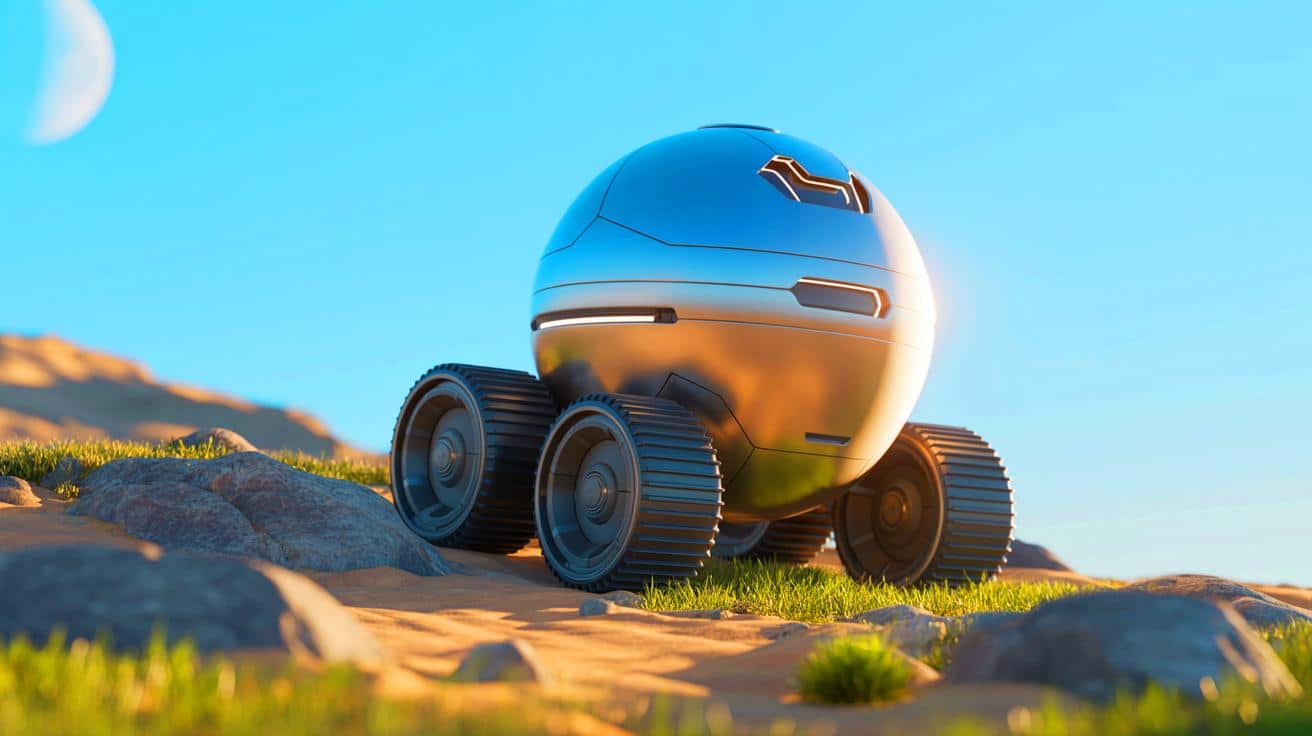
Developing a spherical robot capable of navigating rough terrain involves overcoming significant engineering challenges. The Texas A&M team approached these challenges with innovative solutions, resulting in the RoboBall II and RoboBall III prototypes. RoboBall II, with a diameter of 2 feet, serves as the lab bench version. It features a propulsion system that includes a pendulum and motors, allowing it to roll in any direction. This design enables it to traverse various surfaces, including grass, gravel, sand, and even water, reaching speeds of up to 20 mph.
RoboBall III represents a more advanced iteration, with a diameter of 6 feet and added capabilities. It can carry payloads, such as sensors and cameras, making it suitable for practical applications in exploration and data collection. The ability to inflate and deflate allows RoboBall III to adapt its traction, enhancing its versatility across different terrains. This adaptability showcases a significant leap in robotic engineering, emphasizing the potential of spherical robots to operate in environments previously considered too challenging for traditional designs.
Potential Applications on Earth and Beyond
The versatility of the RoboBall prototypes extends beyond lunar or planetary exploration. The team envisions these robots playing a crucial role in terrestrial applications, particularly in search and rescue operations. In disaster-stricken areas, such as those affected by hurricanes, a swarm of RoboBalls could be deployed to map flooded regions, locate survivors, and gather essential data without putting human lives at risk. This capability highlights the importance of technological advancements in enhancing safety and efficiency in emergency response efforts.
Moreover, the spherical design of the RoboBalls offers distinct advantages in terms of durability and mobility. Unlike traditional wheeled or legged robots, RoboBalls have no right-side up or tipping issues, allowing them to navigate unstable environments with ease. This feature makes them particularly valuable for operations in unpredictable conditions, where traditional robotic designs might falter. The ongoing field tests on the beaches of Galveston will further explore these capabilities, providing valuable insights into the robots’ performance in real-world scenarios.
The Future of Spherical Robots
As the RoboBall project progresses, the team at Texas A&M is focused on refining the design and expanding its potential applications. Future developments may include integrating advanced payload modules and enhancing the robots’ autonomous capabilities. These advancements could open new avenues for exploration, from the depths of our oceans to the far reaches of space. The RoboBall project exemplifies how innovative thinking can lead to breakthroughs that redefine our approach to technology and exploration.
While the current prototypes have already demonstrated significant potential, the journey of spherical robots is just beginning. As researchers continue to push the boundaries of what these robots can achieve, questions arise about their broader impact on industries and society. How might these innovations shape our future interactions with the world around us, and what new possibilities could they unlock for humanity?
Continue reading