



“Is This the End?”: NASA and Sierra Space’s Contract Drama Unfolds (and It’s More Personal Than You Think)
 By
Noah Bennett
By
Noah Bennett
| IN A NUTSHELL |
|
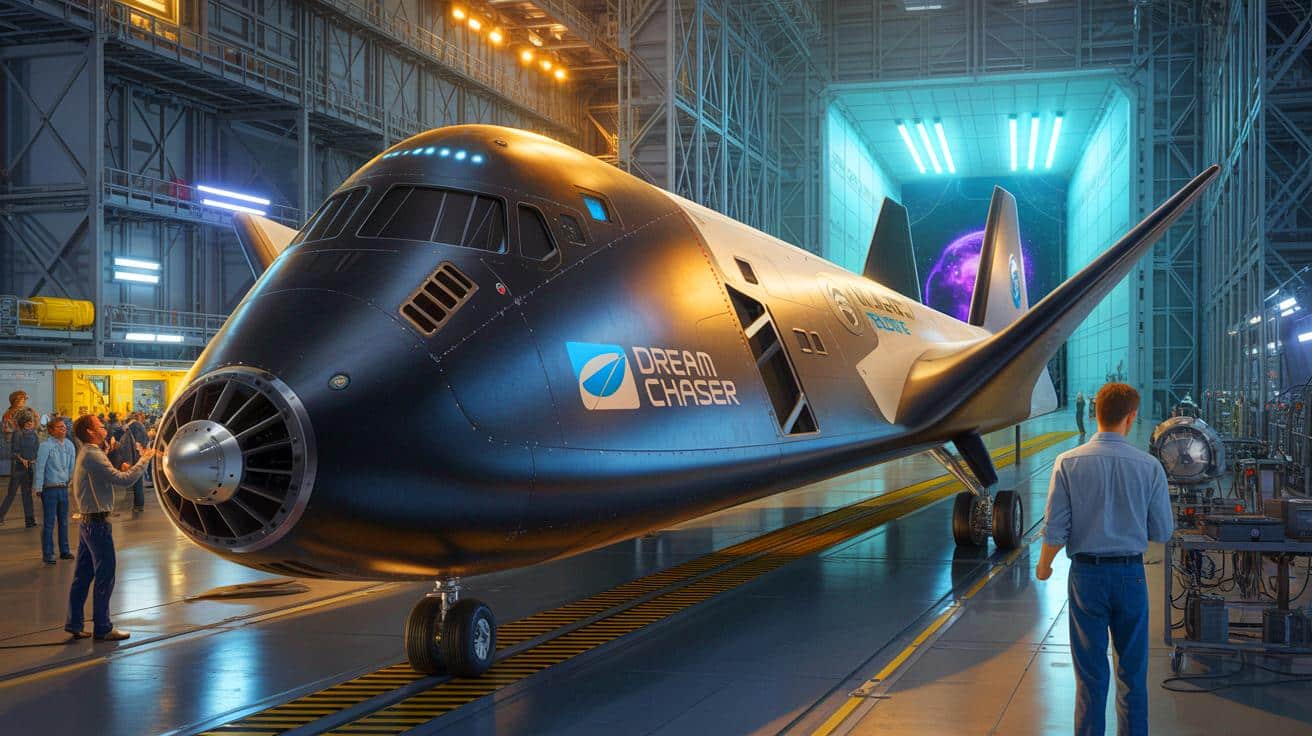
The Dream Chaser spaceplane, a project by Sierra Space and NASA, has undergone significant changes. The two organizations have renegotiated their contract, shifting the spaceplane’s first orbital flight to next year. This mission will see Dream Chaser as a free flier rather than visiting the International Space Station (ISS). This adjustment marks a pivotal moment for the spaceplane, aligning with broader shifts in space exploration and defense. As NASA plans to decommission the ISS by 2030, the future of space missions and the role of spacecraft like Dream Chaser are evolving rapidly.
Understanding the Dream Chaser Project
The Dream Chaser is a unique spacecraft designed to service low-Earth orbit missions. Originally, it was intended to be part of NASA’s Commercial Resupply Services (CRS-2) contract. This contract aimed to engage private companies in providing cargo missions to the ISS. Alongside SpaceX and Northrop Grumman, Sierra Space was selected in 2016 as part of the second wave of companies tasked with this mission.
The Dream Chaser has the capability to launch vertically and land like a conventional aircraft on a runway. This versatility is a key factor in its design, allowing it to serve multiple purposes beyond just resupply missions. However, the project has faced several delays due to technical challenges. The complex propulsion system, which can switch between different thrust modes, has been particularly problematic, delaying its certification for ISS missions.
Despite these setbacks, Sierra Space remains committed to its vision for Dream Chaser. The company’s goal is to transform the spaceplane into a national asset, capable of serving defense and security missions. This shift in focus is a strategic move, reflecting the evolving landscape of space exploration and national security priorities.
Challenges Leading to Contract Renegotiation
The renegotiation of the contract between NASA and Sierra Space was driven by a combination of internal and external factors. Internally, the development of Dream Chaser encountered numerous delays. Design changes and propulsion system issues were significant hurdles that prevented the spaceplane from being ready for its intended mission schedule.
Externally, the impending decommissioning of the ISS in 2030 added a sense of urgency to the situation. With the station’s operational timeline drawing to a close, there was uncertainty about whether there would be enough time to complete the seven cargo missions initially planned under the CRS-2 contract. This led NASA and Sierra Space to reevaluate their partnership and potential mission profiles for Dream Chaser.
Moreover, Sierra Space’s ambition to position Dream Chaser as a versatile asset for national defense and security necessitated a decoupling from its exclusive NASA commitments. This new direction aligns with the broader trend of integrating private space capabilities into national security strategies, ensuring that assets like Dream Chaser are ready for a variety of mission profiles.
The Future of Low-Earth Orbit Missions
As the timeline for the ISS’s decommissioning approaches, the focus is shifting towards the future of low-Earth orbit missions. The post-ISS era presents both challenges and opportunities for spacecraft like Dream Chaser. Sierra Space is positioning the spaceplane to take advantage of this new landscape.
Dream Chaser’s design allows for rapid turnaround and reusability, making it ideal for servicing future private space stations. This capability is crucial as private industry increasingly plays a role in space exploration and station operations. The spaceplane’s ability to adapt to various mission requirements makes it a valuable asset for both commercial and defense purposes.
The renegotiated agreement with NASA reflects this forward-looking approach. While NASA is no longer obligated to purchase cargo missions, the option remains open, providing flexibility for both parties. This arrangement also allows Sierra Space to pursue other opportunities aligned with national security and defense tech markets, expanding the potential applications of Dream Chaser.
“Chaos erupts with 6M options”: 2026 Dodge Durango SRT Hellcat Jailbreak Ignites Passion and Fury
Strategic Implications for National Defense
The shift in Dream Chaser’s mission profile has significant implications for national defense strategies. Sierra Space’s emphasis on the spaceplane as a “national asset” highlights the growing intersection between space exploration and security priorities. As global threats evolve, the ability to deploy versatile, rapid-response spacecraft becomes increasingly important.
Fatih Ozmen, Executive Chair at Sierra Space, emphasized the importance of Dream Chaser’s transition in meeting diverse mission profiles. The spaceplane’s flexibility and capabilities align with national security needs, offering unique advantages in defense tech applications. This strategic positioning is not only about expanding Dream Chaser’s role but also about ensuring its relevance in the next era of space innovation.
The collaboration with NASA, while shifting in focus, remains a key component of this strategy. By maintaining a partnership with the space agency, Sierra Space ensures that Dream Chaser is well-integrated into national and international space efforts, supporting a range of missions from resupply to security operations.
The renegotiation of the Dream Chaser contract marks a significant evolution in its mission and purpose. As space exploration enters a new phase, the roles of spacecraft are being redefined. How will these changes influence the future of space travel and national security, and what further innovations might emerge as a result?