

“This Mission Survived Trump’s Cuts”: But Others Are Still Hanging in the Balance (and You May Be Affected)
 By
Noah Bennett
By
Noah Bennett
| IN A NUTSHELL |
|
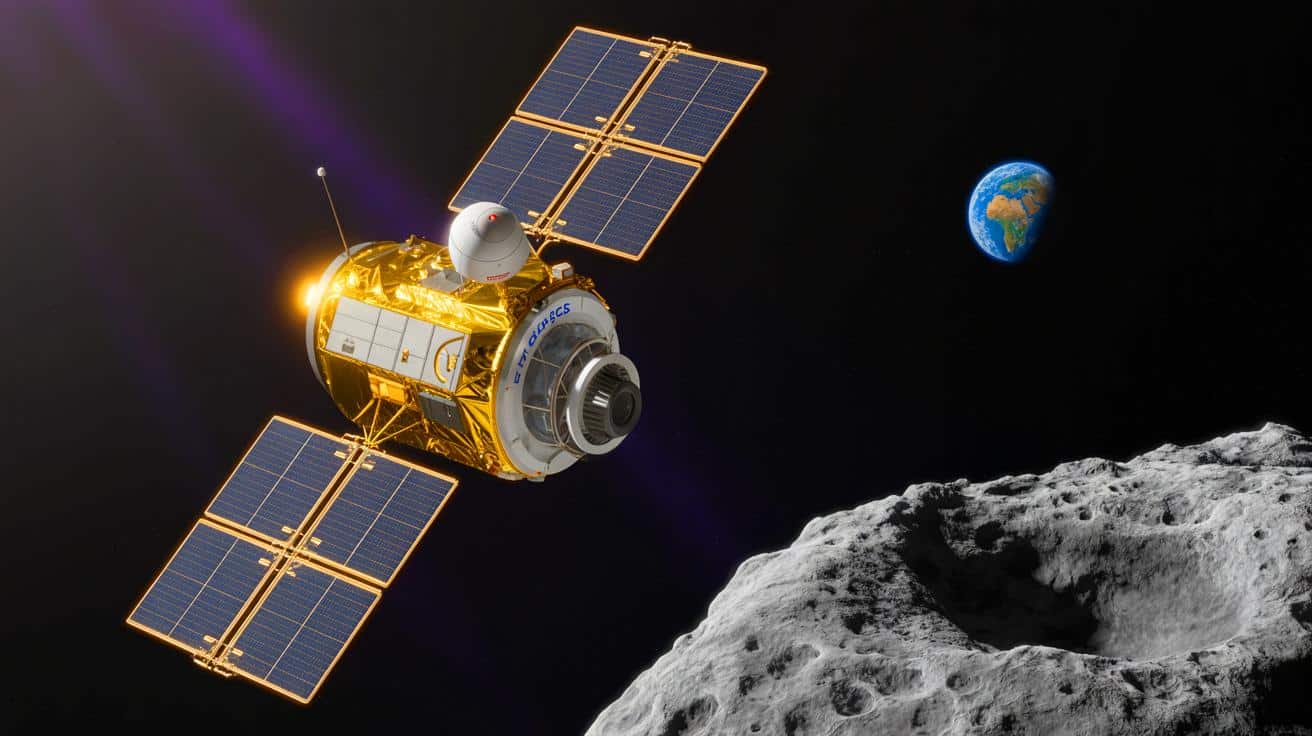
NASA’s decision to continue with the OSIRIS-APEX mission to asteroid Apophis marks a significant moment in the space agency’s trajectory, especially after initial plans for termination under the Trump administration. This mission, previously set for cancellation, highlights the ongoing struggle for funding within NASA’s science division. As the spacecraft prepares for its journey to Apophis, the larger narrative of budget allocations, political influence, and scientific priorities unfolds. In this climate of uncertainty, the fate of many other crucial space missions remains unclear, raising fundamental questions about the future of space exploration and research.
OSIRIS-APEX: A Mission Resurrected
The OSIRIS-APEX mission represents a pivot from its predecessor, OSIRIS-REx, which successfully returned asteroid samples to Earth in 2023. This new mission aims to explore Apophis, a potentially hazardous asteroid, which will pass within 20,000 miles of Earth in 2029. Scientists view this as a rare opportunity to study an asteroid that could pose a future threat. The spacecraft, still in excellent condition, was repurposed for this mission, offering a cost-effective approach to furthering NASA’s scientific objectives.
Despite its reprieve, OSIRIS-APEX was initially earmarked for cancellation as part of a broader effort to cut NASA’s science budget by nearly 50%. The Trump administration’s proposal would have ended 19 active missions, including this one. However, strong advocacy and specific congressional earmarks helped secure its continuation. The mission’s reinstatement underscores the importance of strategic congressional support in maintaining scientific initiatives.
Fiscal Challenges and Political Maneuvering
The proposed budget cuts posed a significant threat to NASA’s science division, which has long been a cornerstone of the agency’s exploratory efforts. The Senate and House responded differently to these cuts, with the Senate maintaining NASA’s science budget at $7.3 billion, while the House proposed a reduction to $6 billion. Both figures were significantly higher than the White House’s proposal of $3.9 billion. The discrepancy between these numbers highlights the complex interplay between political priorities and scientific needs.
While OSIRIS-APEX found a lifeline in congressional support, many other missions remain in a state of uncertainty. The lack of a finalized budget exacerbates this instability, causing potential delays and disruptions in scientific research. The NASA team, along with scientists from other missions, face the daunting task of planning for potential termination, further complicating the landscape of space exploration.
Impacts on the Scientific Community
The uncertainty surrounding funding has already caused significant disruptions within the scientific community. For many scientists, the potential termination of missions means the loss of critical research opportunities and valuable data. Younger scientists, in particular, face challenges as they are left in limbo, unable to fully engage with their research projects. This not only affects their professional development but also the future pipeline of scientific expertise.
The budget constraints have also led to a depletion of expertise, as engineers and scientists are forced to shift their focus to other areas. This brain drain is particularly evident in missions like OSIRIS-APEX, where the necessary recalibration of instruments and planning is delayed. The long-term consequences of this disruption could hinder NASA’s ability to respond to future space exploration challenges effectively.
The Path Forward: Navigating Uncertainty
With the partial government shutdown and ongoing budget negotiations, NASA’s path forward remains fraught with uncertainty. Missions like OSIRIS-APEX, while currently safe, illustrate the precarious nature of funding dependent on political whims. This situation has prompted scientists and advocates to rally for the preservation of NASA’s science initiatives, emphasizing the critical importance of these missions for advancing human knowledge.
The broader question remains: how can NASA and the scientific community ensure the sustainability and continuity of vital space missions amidst such fiscal and political volatility? As the agency navigates these challenges, the need for a stable and supportive funding environment becomes increasingly apparent. This stability is essential not only for the missions currently at risk but also for the future of space exploration as a whole.
The future of NASA’s science missions hangs in the balance, contingent on political decisions and budget negotiations. While some missions have narrowly escaped cancellation, others remain uncertain, highlighting the challenges of maintaining a robust space exploration program. As NASA continues to adapt to these constraints, how will it ensure that scientific knowledge and discovery remain at the forefront of its mission? What strategies can be employed to safeguard against future funding uncertainties?