



Robodog A2 Sparks Outrage as Expert Warns “It’s a Public Safety Hazard” in Viral Agility Video
 By
Noah Bennett
By
Noah Bennett
| IN A NUTSHELL |
|
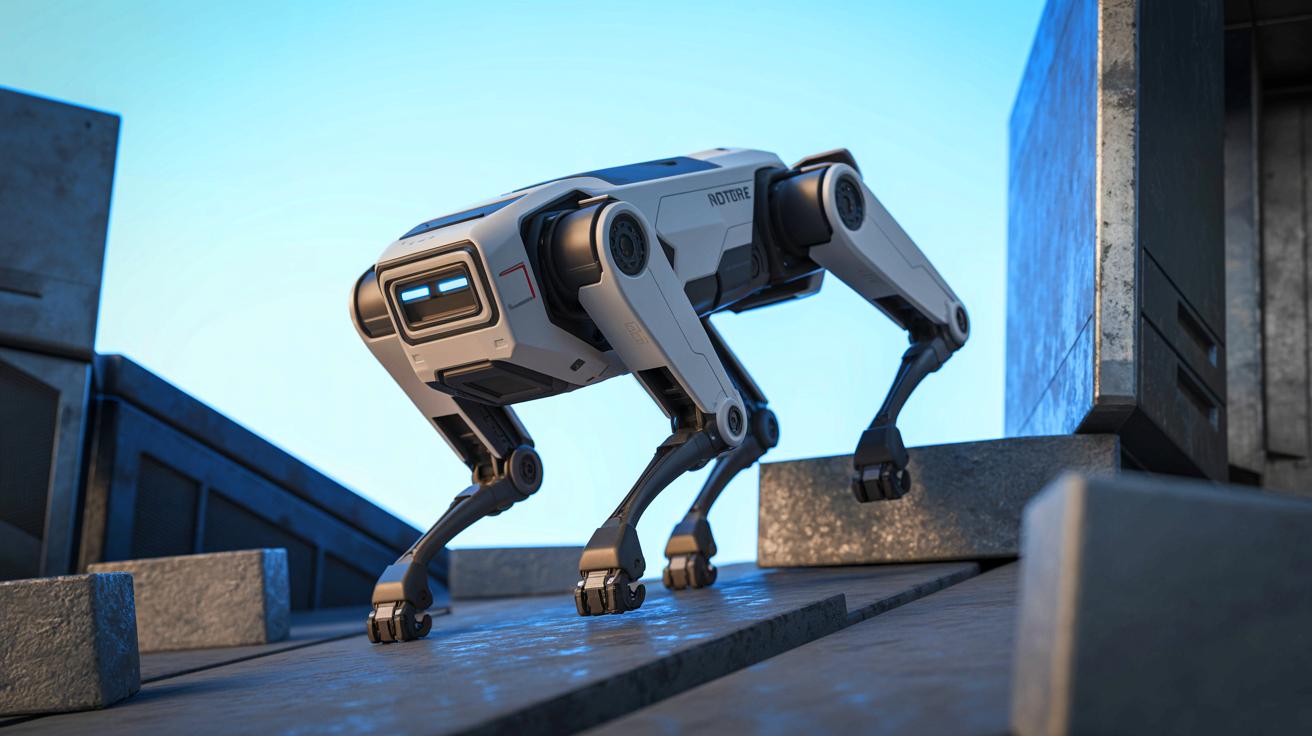
The Unitree A2 “Stellar Explorer” robodog represents a significant advancement in the field of robotics, combining agility, strength, and innovative technology. Designed for industrial and research applications, this quadruped robot’s capabilities are showcased through a striking video that highlights its impressive features. The video captures the A2 navigating challenging terrains, demonstrating its agility, and even enduring a human jumping on its back, all of which underscore its robustness and versatility.
The Rise of Robodogs in Industry
The advent of robodogs like the Unitree A2 marks a new era in industrial robotics. These machines are increasingly being adopted for a variety of applications, from site inspections to logistics operations. Their ability to function in environments that may be hazardous or inaccessible to humans gives them a distinct advantage. The A2’s robust design, equipped with a standing load capacity of up to 220 pounds, exemplifies their potential in such settings.
Beyond industrial applications, robodogs also hold promise for research and development. Their autonomous capabilities, powered by advanced AI systems and sophisticated sensors, enable them to perform tasks with precision and efficiency. The A2’s integration of technologies like ultra-wide LiDAR and HD vision cameras ensures comprehensive environmental awareness, allowing it to navigate and adapt to dynamic conditions seamlessly.
Technical Innovations and Capabilities
The Unitree A2 is a testament to the cutting-edge advancements in robotics engineering. Equipped with joint motors that provide 12 degrees of freedom, the A2 can execute complex movements with ease. Its motion range and maximum joint torque reflect its capacity to perform demanding tasks. The robot’s ability to carry a payload of 66 pounds over a distance of nearly 8 miles on a single charge highlights its endurance and practicality.
Moreover, the A2’s energy efficiency is enhanced by its dual 9,000-mAh battery packs, which allow for extended operation. The batteries are designed to be hot-swapped, ensuring minimal downtime during tasks. The quadruped’s top speed of 11.2 mph further emphasizes its agility and speed, making it suitable for a wide range of applications.
Navigation and Autonomy
One of the most remarkable features of the Unitree A2 is its autonomous navigation system. The robot is equipped with AI-driven obstacle avoidance, powered by an octa-core processor. This allows it to maneuver through complex environments without human intervention. The integration of Wi-Fi 6 and Bluetooth 5.2, along with optional 4G and GPS, ensures reliable connectivity and precise location tracking.
The A2’s navigation capabilities are complemented by its sensor suite, which includes LiDAR and a vision camera for depth perception and environmental awareness. These technologies work in tandem to detect and respond to obstacles, ensuring safe and efficient operation. The robot’s ability to update its software over-the-air keeps it at the forefront of innovation, allowing it to adapt to new challenges as they arise.
Implications for the Future
The introduction of advanced robodogs like the Unitree A2 has far-reaching implications for various industries. As these machines become more prevalent, they have the potential to transform how businesses operate, enhancing productivity and safety. The A2’s design and capabilities suggest a future where robots play a more integral role in daily operations, performing tasks that were once considered too dangerous or labor-intensive for humans.
However, the deployment of robodogs also raises questions about the ethical and social implications of increased automation. As industries continue to adopt these technologies, how will they balance the benefits of efficiency and innovation with the need for human oversight and employment? This ongoing conversation will shape the future of robotics and its impact on society.
As robots like the Unitree A2 “Stellar Explorer” become more integrated into our world, they offer both opportunities and challenges. Will the advantages they bring to industries outweigh the potential disruptions they cause in the workforce, or will new roles emerge to complement their capabilities?
Continue reading