


“Shocking Fear Explodes in Marines’ Eyes”: Hydrogen Fuel Cells Power US Military Operations in Dangerous Field Conditions
 By
Noah Bennett
By
Noah Bennett
| IN A NUTSHELL |
|
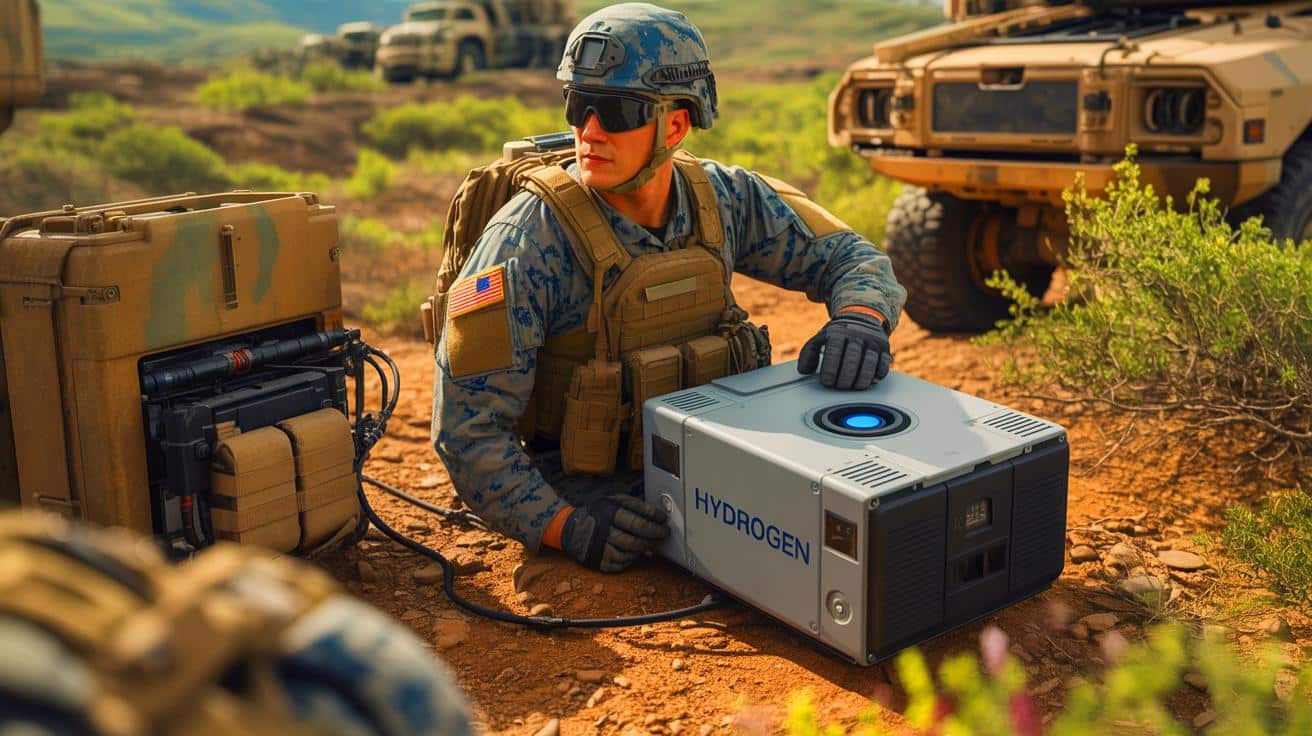
In an era where modern military operations increasingly rely on advanced technology, the demand for efficient power sources has never been more critical. The U.S. Marine Corps is exploring new energy solutions to keep pace with technological advancements and operational demands. The U.S. Naval Research Laboratory (NRL) is spearheading an initiative that involves adapting hydrogen fuel cell technology for field use. This innovation aims to replace the heavy batteries and generators currently used by soldiers, offering a more sustainable and lightweight solution. The introduction of the Hydrogen Small Unit Power (H-SUP) system marks a significant step forward in military energy technology.
The Rising Demand for Portable Power
As military technology evolves, the demand for portable power sources has surged. Soldiers today rely heavily on a wide array of electronic devices, including personal radios, computer networks, and night-vision equipment. These devices are essential for modern warfare but come with the burden of additional weight, as soldiers carry numerous batteries and fuel cans. The logistical challenges of transporting heavy power sources across difficult terrain have prompted military researchers to seek more efficient alternatives.
The NRL has identified hydrogen fuel cells as a promising solution. By adapting this technology, initially designed for small unmanned aerial vehicles (UAVs), the military aims to reduce the weight soldiers must carry. The H-SUP system is designed to provide the same efficiency and weight savings to Marines as it does to UAVs. This innovation allows soldiers to maintain their operational capabilities without the added burden of heavy batteries.
Innovative Features of the H-SUP System
The H-SUP system is not only lighter than traditional batteries but also boasts a higher energy density. With a power output of up to 1.2 kW, it offers a more efficient and quieter alternative to conventional generators. The system’s electrochemical operation, as opposed to combustion, results in a lower heat signature, making it harder for enemies to detect. This stealth capability is critical for maintaining the element of surprise in tactical operations.
The modular design of the H-SUP allows for easy modification and integration into existing military vehicles.
This flexibility ensures that the system can be tailored to meet the specific requirements of different missions. Its rugged construction and waterproof casing make it suitable for the harsh conditions often encountered in military operations.
Field Testing and Feedback
The H-SUP system has undergone extensive field testing to evaluate its performance under real-world conditions. Trials were conducted at several U.S. Marine Corps bases, including Camp Lejeune and Air Station Yuma, as well as with the 101st Airborne at Fort Polk. These tests provided valuable data that is being used to refine the technology further.
Feedback from soldiers who used the H-SUP system in the field has been overwhelmingly positive. Captain Joshua Ashley of the U.S. Marine Corps highlighted the importance of warfighter feedback in the development process. He emphasized that the system’s quiet, efficient, and reliable power meets the needs of Marines engaged in expeditionary operations. The feedback loop between the lab and the field is crucial for ensuring that the technology evolves to meet the practical demands of military users.
Future Implications for Military Operations
The successful implementation of hydrogen fuel cell technology in the field could have far-reaching implications for military operations. By reducing the logistical burden of transporting heavy power sources, the H-SUP system enhances the mobility and operational efficiency of military units. This innovation not only supports the current needs of the military but also aligns with broader goals of reducing the environmental impact of military operations.
The shift towards more sustainable energy solutions reflects a growing recognition of the need to balance operational effectiveness with environmental responsibility.
As the military continues to adapt to the challenges of modern warfare, the integration of cutting-edge technologies like the H-SUP system will be essential for maintaining a tactical edge.
The development and deployment of the H-SUP system represent a significant advancement in military energy technology. By embracing hydrogen fuel cells, the U.S. Marine Corps is taking a proactive approach to addressing the challenges of modern warfare. As this technology continues to evolve, it prompts us to consider: How will the integration of sustainable energy solutions redefine the future of military operations?
Continue reading