



“Eyes Transformed in a Flash”: New Breakthrough Set to Revolutionize Vision Correction Forever
 By
Priya Venkataraman
By
Priya Venkataraman
| IN A NUTSHELL |
|
In the ever-evolving field of vision correction, a groundbreaking technique has emerged that may revolutionize how we address common eyesight issues. Scientists from Occidental College and the University of California, Irvine, have developed a non-invasive method that leverages mild electric currents to reshape the cornea, potentially offering an alternative to traditional LASIK surgery. This innovative procedure, known as electromechanical reshaping (EMR), was recently highlighted at the American Chemical Society’s Fall 2025 meeting, showcasing its potential to change the landscape of vision correction technology.
A New Approach to Vision Correction
Traditional methods of correcting vision, such as LASIK surgery, have long been the standard for those looking to eliminate the need for corrective lenses. LASIK, which involves using lasers to remove microscopic amounts of corneal tissue, has a high success rate but comes with its own set of drawbacks. The invasive nature of the surgery can alter the structural integrity of the eye, and the cost can be prohibitive for many. In contrast, the newly developed electromechanical reshaping (EMR) technique presents a non-invasive alternative that could mitigate these concerns.
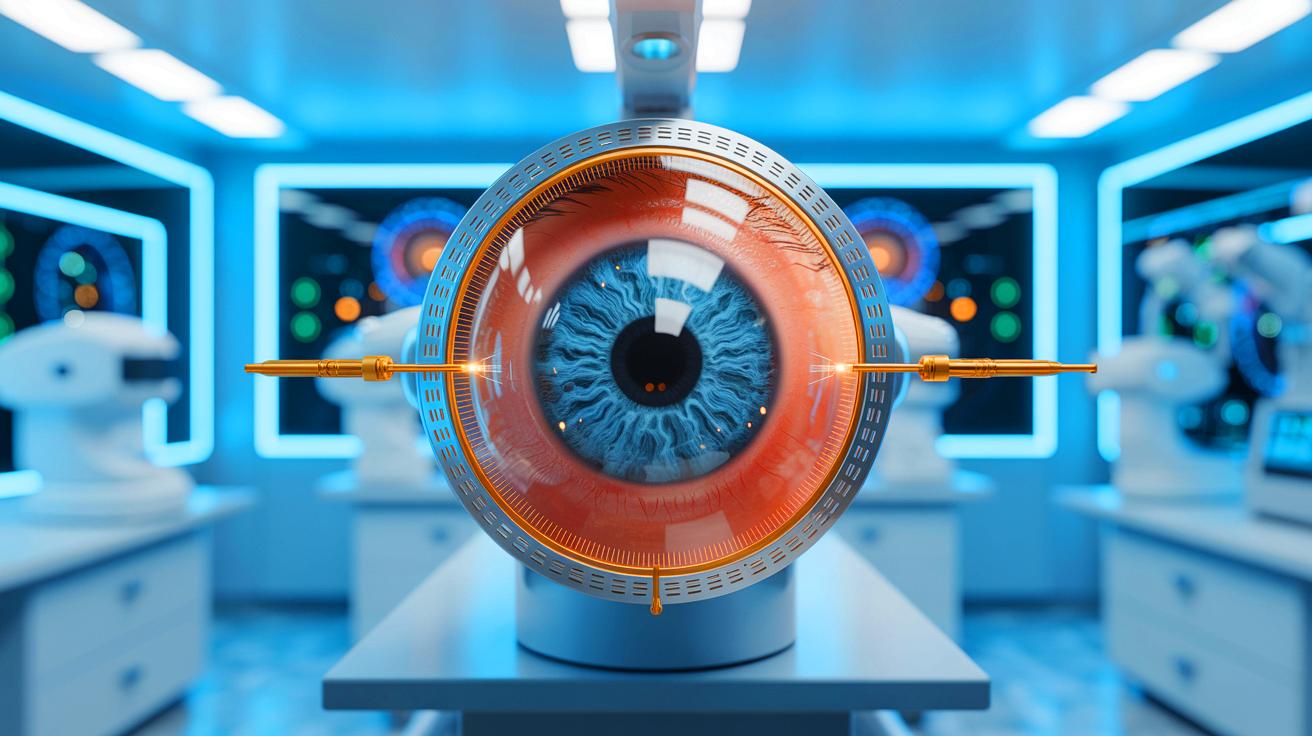
EMR works by applying a low-level electrical current through a specially designed platinum “contact lens” electrode. This process changes the pH of the corneal tissue, temporarily increasing its acidity and making it pliable. Once the cornea is reshaped using the electrode as a mold, the current is stopped, allowing the tissue to harden in its new form. This entire process takes approximately one minute and requires no cutting or removal of tissue. The implications of this method could be significant, potentially making vision correction more accessible and less risky.
Scientific Discoveries and Accidental Breakthroughs
The journey to the development of EMR was not straightforward. According to Brian Wong, a professor and surgeon at the University of California, Irvine, the entire process was discovered somewhat by accident. Wong was exploring the concept of living tissues as moldable materials when he stumbled upon the process of chemical modification that is central to EMR. This serendipitous discovery has paved the way for a technique that could replace traditional surgical methods.
The research team, led by Michael Hill from Occidental College, has been meticulous in its approach. The initial studies involved reshaping rabbit eyeballs, demonstrating the potential of EMR to correct conditions like nearsightedness. The results were promising, showing successful corneal correction without any incisions, lasers, or trauma to the eye. However, the researchers acknowledge that there is still a long journey ahead before EMR can be widely used in clinical settings.
Challenges and Future Prospects
While the initial results of EMR are encouraging, there are significant challenges that must be addressed before it can be adopted as a mainstream vision correction technique. One of the primary hurdles is the transition from laboratory testing to clinical trials. The researchers are currently focused on conducting detailed animal studies to better understand the full capabilities and limitations of EMR.
Another challenge is determining the range of vision corrections that EMR can effectively address. While the technique has shown promise in correcting myopia, its effectiveness in treating other conditions such as hyperopia and astigmatism remains to be seen. The research team is optimistic about the potential of EMR, with Hill noting that if the technique reaches commercial use, it could be a cheaper, reversible alternative to LASIK.
Transgender Lives at Risk: “Hormone Therapy Sparks Heart Rhythm Chaos” in Thousands Across America
Potential Impact on the Vision Correction Industry
The introduction of EMR could have profound implications for the vision correction industry. If proven effective and safe, EMR could offer a more accessible option for individuals seeking to improve their eyesight without undergoing invasive surgery. This could democratize vision correction, making it available to a wider population who may have previously been unable to afford or qualify for LASIK surgery.
Moreover, the non-invasive nature of EMR could appeal to those who are wary of surgical procedures. The ability to correct vision with minimal risk and recovery time is an attractive proposition that could significantly alter consumer preferences in the eye care market. As research progresses, it will be interesting to see how EMR is integrated into existing medical practices and how it might redefine the standards for vision correction.
As we look to the future, the potential of electromechanical reshaping to transform vision correction is both exciting and promising. However, the road to widespread adoption is fraught with challenges and uncertainties. Will EMR become the new gold standard in vision correction, or will it remain a niche solution? Only time and rigorous scientific exploration will determine its place in the world of eye care.
Continue reading