


Kejashi Tilt-Wing Motorcycle Sparks Outrage: ‘This Is the Future of Biking, and It’s Terrifying,’ Says Expert
 By
Noah Bennett
By
Noah Bennett
| IN A NUTSHELL |
|
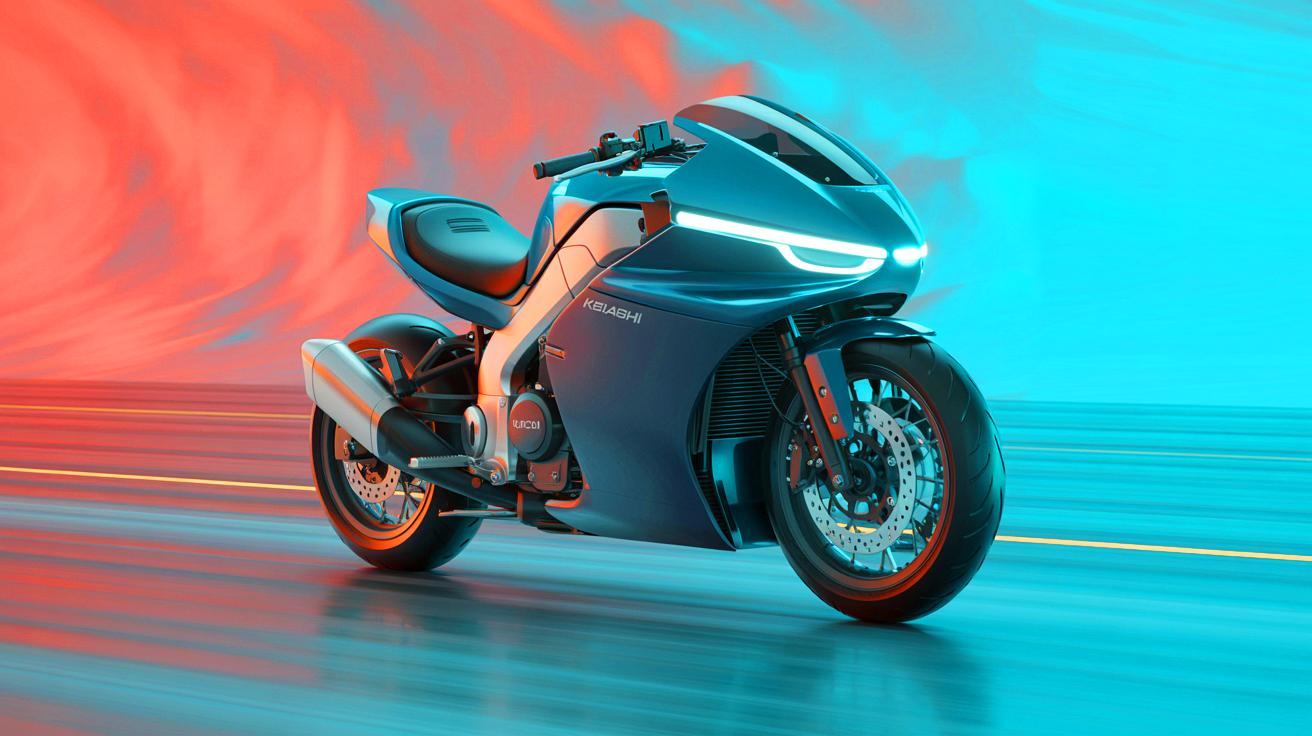
The world of motorcycle innovation is no stranger to daring designs and bold engineering feats. Yet, every so often, a creation emerges that pushes the boundaries of what’s expected. Enter the Kejashi tilt-wing motorcycle, a brainchild of South Australian mechanic Kent Shillitoe. This motorcycle not only challenges traditional bike dynamics but also introduces a unique steering mechanism and an ambitious tilt-wing system. Shillitoe’s inspiration stems from a desire to incorporate the high-performance aerodynamics of Formula One cars into a two-wheeled marvel. As the world watches, the Kejashi motorcycle becomes a testament to the relentless pursuit of innovation in the realm of motorcycling.
Emulating Formula One Aerodynamics
Formula One cars are renowned for their ability to achieve incredible speeds, thanks in large part to their sophisticated aerodynamic designs. Shillitoe’s Kejashi motorcycle seeks to harness this same principle by introducing a tilt-wing system. The concept is straightforward yet revolutionary: maintain a level wing to ensure maximum downforce, without the adverse side effects experienced by traditional MotoGP bikes.
MotoGP bikes incorporate small winglets, but these are fixed and tilt along with the bike, creating instability at high lean angles. Shillitoe’s approach allows the wing to remain level, enhancing grip and stability. By positioning the wing at the front of the motorcycle, Shillitoe ensures that the additional downforce is applied where it’s most needed, significantly improving the bike’s handling dynamics.
“Keeping the wing level provides all the downforce without pushing the rider towards the gravel trap,” says Shillitoe, highlighting the innovative nature of this design. This approach not only enhances performance but also challenges conventional motorcycle design philosophies.
The Unconventional Steering System
The Kejashi motorcycle doesn’t stop at aerodynamics. Its steering mechanism is equally groundbreaking. Shillitoe’s design disconnects the traditional steering head, mounting the handlebars and forks on a trailing arm. This allows the front wheel to swing outward during turns, reducing the bike’s lean angle and enhancing stability.
“Offsetting the weight toward the inside of the turn naturally reduces the required lean angle,” explains Shillitoe. This system mirrors the dynamics of a Can-Am Spyder, where the inside wheel can lift during aggressive cornering, enhancing control and stability.
The offset steering provides an unexpected advantage: the ability to navigate obstacles with ease. As Shillitoe recounts, “I once maneuvered around a boulder without thinking, and it passed smoothly between the wheels.” This unexpected functionality adds to the bike’s unique appeal.
Riding Experience and Challenges
Riding the Kejashi motorcycle is an experience like no other. Initial reactions often include a sense of disconnection, but as riders adapt, the system reveals its benefits. “It felt all kinds of wrong to begin with,” Shillitoe admits. However, with time, the bike’s stability and handling become second nature.
The tilt-wing system, positioned prominently in front of the rider, requires some adjustment. Shillitoe likens it to the HALO device in Formula One, a central beam that riders must adapt to. Yet, the design ensures that once the bike is cornering, the rider’s vision remains unobstructed, allowing for a safe and exhilarating ride.
Despite the learning curve, the Kejashi motorcycle delivers an unparalleled riding experience. Riders find themselves in a new dimension of control, where traditional motorcycle dynamics are reimagined and enhanced.
The Vision and Future Prospects
Shillitoe’s Kejashi motorcycle stands as a testament to innovation and the relentless pursuit of excellence. His willingness to experiment with radical designs opens new possibilities in motorcycle engineering. As Shillitoe reflects on his creation, he remains optimistic about its potential impact on the industry.
“I always think while working on bikes,” he shares, emphasizing his commitment to pushing boundaries. The Kejashi motorcycle not only showcases Shillitoe’s ingenuity but also serves as a catalyst for future innovations, inspiring others to explore unconventional designs.
As the motorcycle industry evolves, the Kejashi’s unique blend of aerodynamics and steering promises to influence future designs. The question remains: how will this groundbreaking design shape the future of motorcycle engineering?
The Kejashi tilt-wing motorcycle embodies the spirit of innovation, challenging traditional motorcycle design with bold aerodynamics and steering. As Kent Shillitoe continues to refine his creation, the industry watches with anticipation. What other unconventional designs will emerge as the pursuit of motorcycle excellence continues?