


Earth’s Secret ‘Kryptonite Twin’ Sparks Outrage as Scientists Demand Its Unearthing for Humanity’s Sake
 By
Gabriel Cruz
By
Gabriel Cruz
| IN A NUTSHELL |
|
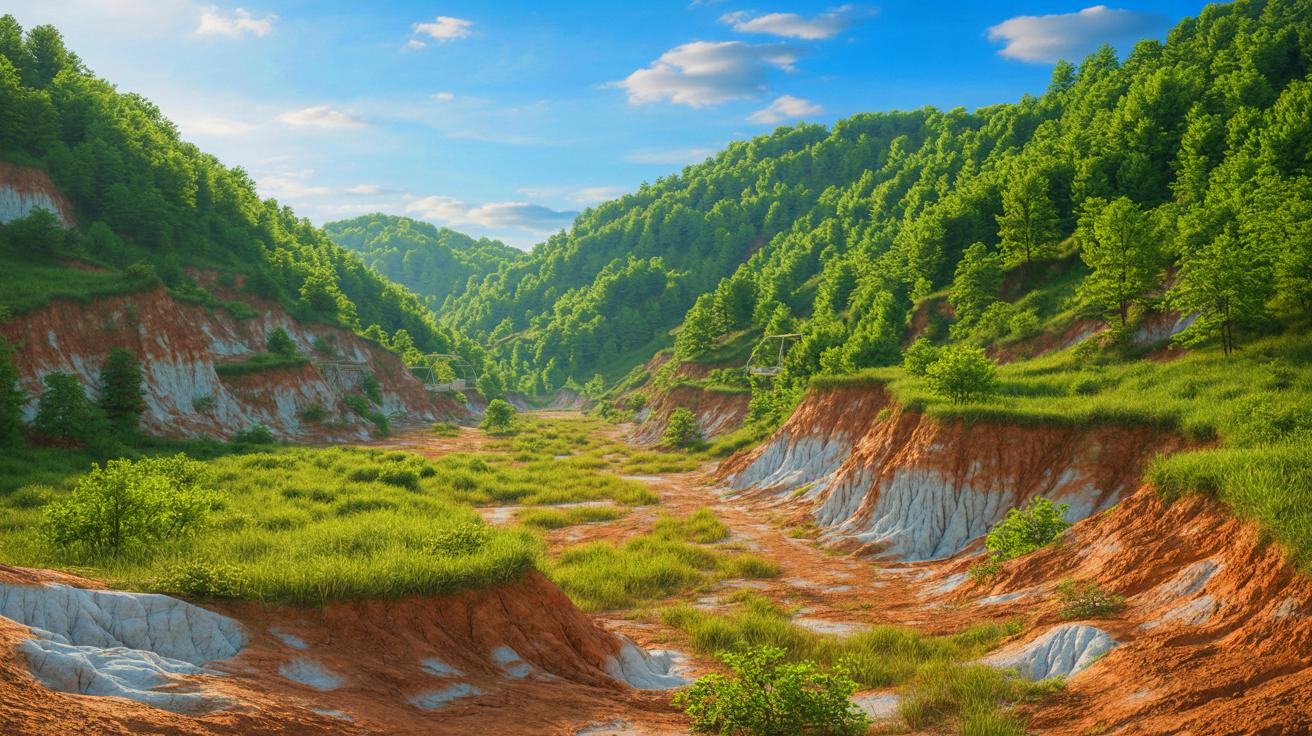
Buried beneath the serene landscapes of Serbia’s Jadar Valley lies a mineral with the potential to revolutionize the green energy sector: jadarite. This unique mineral, discovered over two decades ago, possesses a chemical composition eerily similar to that of fictional kryptonite. Its real-world significance, however, lies in its lithium and boron content, which could power a million electric vehicles annually. Yet, despite its promise, jadarite remains entangled in environmental and societal challenges, preventing its extraction and utilization. As the world grapples with the transition to sustainable energy, jadarite’s story underscores the complexity of balancing ecological preservation with technological advancement.
The Discovery and Significance of Jadarite
In 2004, geologists prospecting for borates in Serbia’s Jadar Valley stumbled upon an extraordinary find. Among the sedimentary layers lay a soft, white, powdery mineral that defied classification. This rare mineral, later named jadarite, contains both lithium and boron, making it a potential game-changer in the quest for sustainable energy solutions. Its chemical structure, LiNaSiB3O7(OH), bears a striking resemblance to the fictional kryptonite, capturing global attention.
Jadarite’s discovery in the Jadar Valley marked the unearthing of what is considered one of the world’s largest lithium deposits. According to Michael Page from Australia’s Nuclear Science and Technology Organisation, the mineral holds immense promise for the global green energy transition. The Jadar deposit, in particular, is seen as a critical resource, given its vast lithium reserves. However, jadarite’s significance extends beyond its lithium content. Its boron content can be recovered as a valuable co-product, further enhancing its economic allure.
The Geological Formation of Jadarite
The origin of jadarite is rooted in the unique geological history of the Jadar Valley. The region’s volcanic activity millions of years ago played a pivotal role in its formation. As volcanic ash rich in lithium settled into a shallow lake, the subsequent evaporation of water created an alkaline environment. This environment facilitated the transformation of volcanic deposits into gel-like silica, setting off a series of chemical reactions that culminated in the formation of jadarite nodules.
These nodules, nestled within dolomitic marls and shales, are the result of a complex interplay between volcanic and sedimentary processes. The presence of smectite clay further contributed to the release of lithium, solidifying jadarite’s unique composition. Despite the prevalence of similar geological formations across the Balkans, jadarite remains exclusive to the Jadar Valley, highlighting its rarity and geological significance.
The Environmental and Societal Challenges
While jadarite holds immense potential for the green energy sector, its extraction poses significant environmental and societal challenges. The Jadar Project, spearheaded by mining giant Rio Tinto, aimed to harness the valley’s lithium deposits. However, environmental impact assessments raised concerns about the potential damage to the region’s ecosystems. The prospect of widespread ecological disruption triggered nationwide protests, ultimately leading to the revocation of mining permits in early 2022.
Despite the project’s revival 18 months later, it remains mired in controversy. The timeline for mining has been pushed to 2028 at the earliest, contingent on overcoming both environmental objections and societal resistance. The story of jadarite exemplifies the paradox faced by modern society: how to extract minerals critical for renewable energy without causing irreparable harm to the environment.
Innovative Alternatives and Future Prospects
In the face of these challenges, scientists have sought innovative alternatives to natural jadarite extraction. Recent advancements have led to the creation of a synthetic version of jadarite in laboratory settings. While still a proof of concept, this synthetic mineral offers a glimmer of hope for developing alternative lithium materials that bypass environmentally detrimental extraction methods.
Although the synthetic variant is not yet ready for commercial use, it represents a promising step toward sustainable lithium production. The potential to harness such innovations could pave the way for a greener future, aligning with global efforts to reduce reliance on fossil fuels. However, as researchers continue to explore these possibilities, the broader question remains: how can we balance the urgent need for clean energy with the imperative to protect our planet?
As jadarite remains beneath the serene Serbian landscape, its story serves as a poignant reminder of the complexities inherent in the transition to renewable energy. While the mineral’s potential is undeniable, the path to harnessing it is fraught with challenges that extend beyond technological innovation. As the world strives for a sustainable future, how can we ensure that the pursuit of green energy does not come at an unsustainable environmental cost?