



“Chaos Erupts in the Sky”: US Military Unleashes Groundbreaking Tech with Explosive Potential at Alabama Base
 By
Gabriel Cruz
By
Gabriel Cruz
| IN A NUTSHELL |
|
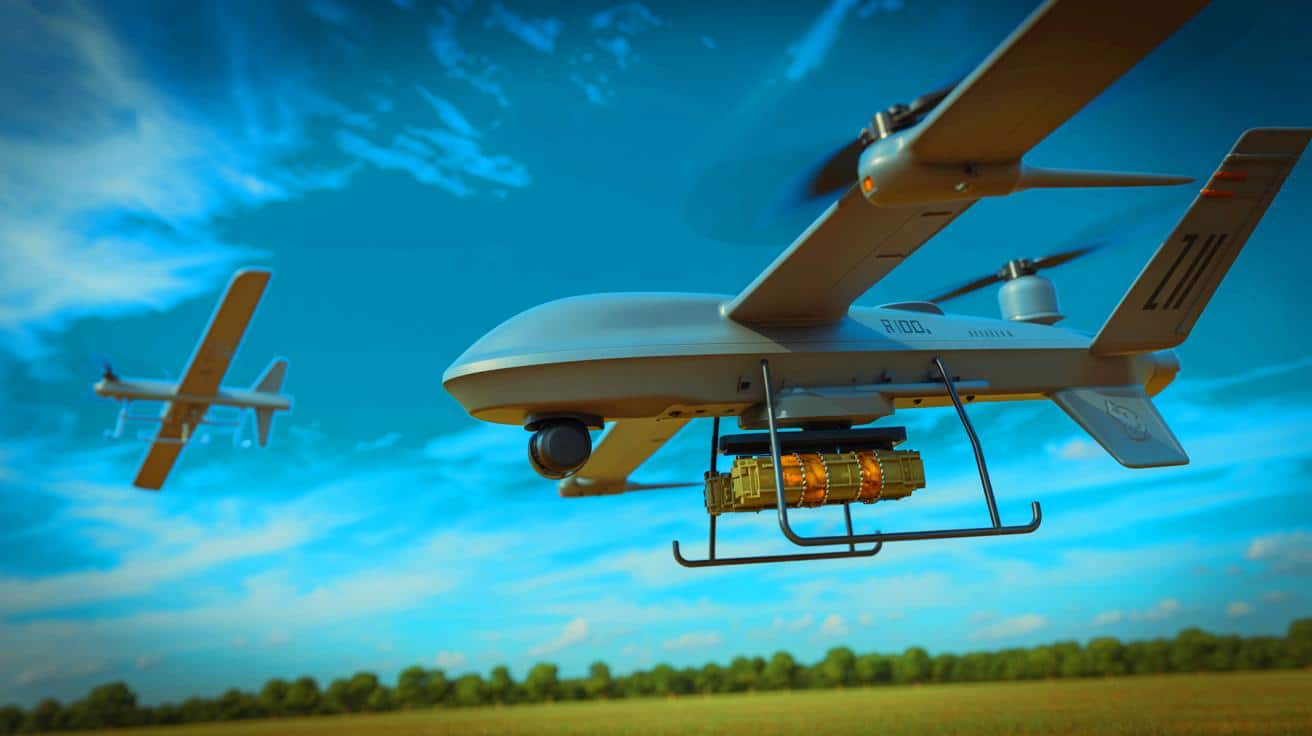
The evolution of military technology continues to reshape modern warfare as the U.S. Army explores innovative ways to integrate unmanned aerial systems into combat scenarios. Recently, a significant development occurred with the deployment of a quadcopter drone equipped with a Claymore mine at Fort Rucker, Alabama. This exercise marks a milestone in the ongoing efforts to enhance precision strike capabilities using drones. While the concept of arming drones with explosives is not entirely new, this particular application represents a novel approach in aerial combat, potentially setting a precedent for future military strategies.
Unprecedented Air-to-Air Combat Achievement
In a groundbreaking event at Fort Rucker, the U.S. Army successfully executed an air-to-air engagement using a quadcopter drone armed with a Claymore mine. During the exercise, the quadcopter targeted and destroyed a winged drone, demonstrating the lethal potential of this new tactic. This achievement is notable as it showcases the Army’s ability to adapt and incorporate lessons learned from recent conflicts, such as those in Ukraine and the Middle East.
The Claymore mine, a highly effective explosive device, has been a staple in military arsenals for decades. Comprised of a curved block of C4 explosive embedded with ball bearings, it can inflict significant damage over a 60-degree arc. Leveraging this established technology in combination with modern drone capabilities represents a strategic advancement. The exercise demonstrated the potential of such a system to enhance the precision and effectiveness of military operations.
Project Shank and Its Implications
The deployment of the armed drone is a part of the U.S. Army’s Project Shank, an initiative led by the Army Combat Capabilities Development Command Armaments Center (DEVCOM AC). This project aims to develop portable drones that can be operated by a single individual in the field. By focusing on cost-effective and versatile solutions, Project Shank seeks to provide the Army with tools that can be rapidly deployed in various combat scenarios.
One of the key elements of Project Shank is the integration of first-person view (FPV) technology, allowing operators to control drones with precision and situational awareness. The successful engagement at Fort Rucker underscores the potential of FPV drones to transform how the military approaches air-to-air combat. This capability not only enhances operational flexibility but also reduces the risk to personnel by allowing remote engagement of targets.
Lessons from Global Conflicts
The U.S. Army’s exploration of drone technology is informed by recent global conflicts, particularly the Russian invasion of Ukraine. Both Ukrainian and Russian forces have employed drones armed with explosives to considerable effect, highlighting the evolving nature of warfare. By analyzing these conflicts, the Army aims to incorporate effective strategies into its own operations.
The use of drones equipped with explosives has proven effective in delivering precise strikes against personnel and equipment. As the Army continues to develop its drone capabilities, it is likely that these insights will shape future tactics and strategies. The integration of drones into military operations not only enhances the Army’s offensive capabilities but also provides valuable data for refining existing doctrines.
Challenges and Future Directions
While the successful deployment of an armed quadcopter represents a significant achievement, several challenges remain in the widespread adoption of such technology. Ensuring the reliability and safety of these systems is paramount, especially when considering the potential for unintended consequences. The Army must also address the ethical implications of using drones in combat, balancing their effectiveness with concerns about collateral damage and civilian safety.
Looking ahead, the Army’s focus will likely be on refining and expanding its drone capabilities. This will involve not only technological advancements but also the development of comprehensive training programs to ensure operators can effectively manage these systems. As the military continues to adapt to an evolving battlefield, the integration of drones will play a crucial role in shaping future combat operations.
The deployment of a quadcopter drone armed with a Claymore mine at Fort Rucker represents a significant advancement in military technology. As the U.S. Army continues to explore innovative approaches to drone warfare, questions remain about the ethical implications and potential consequences of such strategies. How will the integration of armed drones influence future military operations, and what measures will be taken to address the challenges they present?