

Scientists Say “Dinosaur Breath Changed Our World” as Ancient Teeth Reveal Drastic Atmospheric Shifts Affecting Us All
 By
Gabriel Cruz
By
Gabriel Cruz
| IN A NUTSHELL |
|
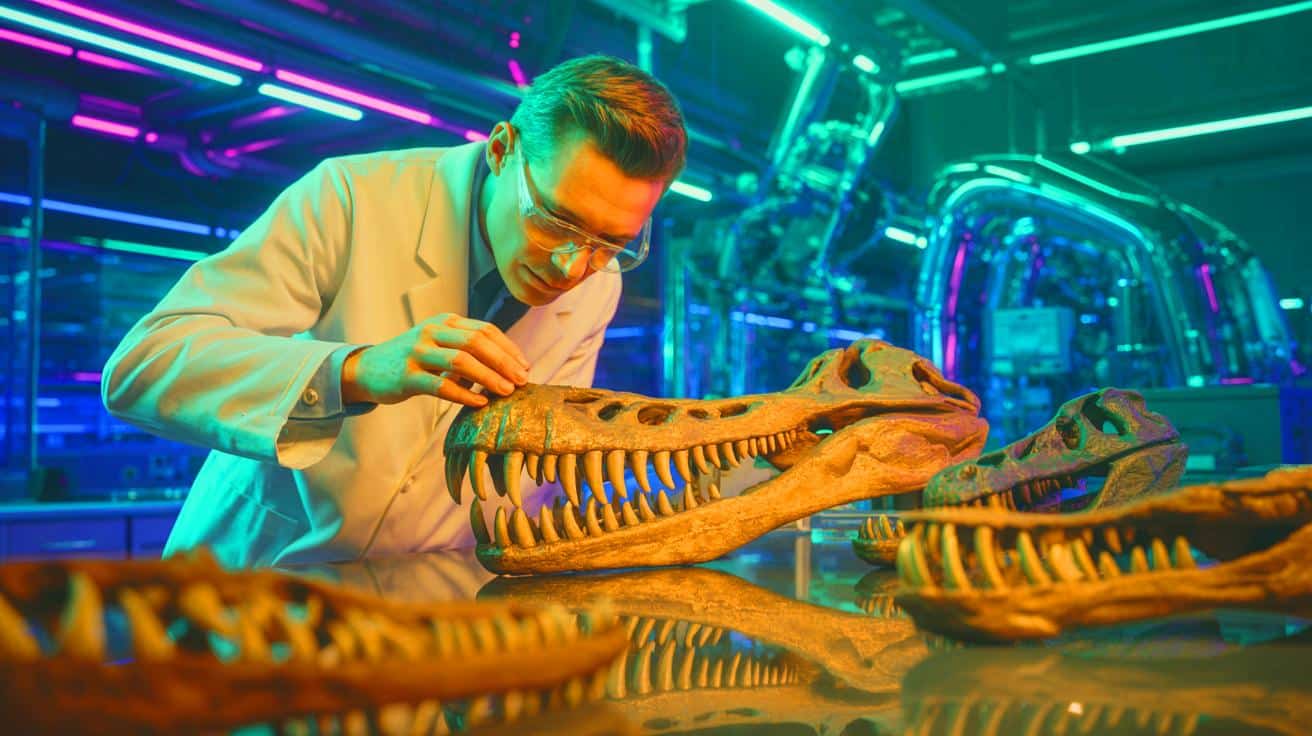
Fossilized dinosaur teeth may seem like an unlikely source of information about ancient climates, yet recent research sheds light on just that. Scientists from the University of Göttingen in Germany have uncovered fascinating details about prehistoric atmospheric conditions by studying tooth enamel from dinosaurs. Their findings suggest that the air these ancient creatures breathed was rich in carbon dioxide (CO2), reaching levels that would be uncomfortable for humans today. By analyzing isotopic traces of oxygen in the enamel, researchers have offered us a glimpse into the atmospheric composition dating back millions of years, revealing significant shifts over time.
Understanding Atmospheric Conditions Through Dinosaur Teeth
Tooth enamel, known for its stability, preserves minute traces of the environment in which an organism lived. This characteristic allows scientists to use it as a window into the past. Researchers at the University of Göttingen have leveraged this property to study dinosaur teeth from North America, Africa, and Europe. By examining the isotopic composition of oxygen molecules in the enamel, they gained insights into the atmospheric conditions of the time.
The study revealed elevated CO2 levels during the dinosaur era. In the late Jurassic period, CO2 levels soared to approximately 1,200 parts per million, about four times higher than preindustrial levels. Even in the late Cretaceous period, CO2 levels were around 750 parts per million, far exceeding today’s 430 parts per million. This high concentration of CO2 suggests a vastly different climate than the one we experience now, with implications for both plant and animal life.
The Role of Volcanic Activity
One intriguing aspect of the research is the indication of a CO2 spike in the atmosphere, potentially linked to volcanic activity. By analyzing oxygen isotopes in the teeth of two specific dinosaurs (a Tyrannosaurus Rex and a sauropod named Kaatedocus siberi) the team observed unusual isotopic compositions. This anomaly may point to increased volcanic eruptions during these periods, which could have contributed to the elevated CO2 levels.
The link between volcanic activity and atmospheric composition offers a new perspective on how natural events have shaped our planet’s climate. Volcanic eruptions release significant amounts of CO2 and other gases into the atmosphere, impacting global temperatures and weather patterns. Understanding these historical events can provide critical insights into the Earth’s climate dynamics and how they have evolved over millions of years.
Implications for Climate Dynamics and Plant Productivity
The study’s findings also suggest that prehistoric plant productivity was significantly higher than today. The analysis indicates that total photosynthesis from plants during the Mesozoic era was more than double that of the present day. This enhanced plant productivity could be attributed to the elevated CO2 levels, which would have facilitated more robust plant growth.
These insights offer a valuable perspective on how changes in atmospheric composition can affect ecosystems and biodiversity.
“[Our method] opens up the possibility of using fossilized tooth enamel to investigate the composition of the early Earth’s atmosphere and the productivity of plants at that time,” says Dr. Dingsu Feng, the study’s lead author.
Such research can inform our understanding of long-term climate dynamics and the interplay between atmospheric conditions and ecological systems.
Future Research and the Great Dying
Building on these findings, the research team plans to extend their analysis to dinosaur teeth from the period known as The Great Dying, a global extinction event that occurred 252 million years ago. This event wiped out nearly all of the planet’s animal life and marked a pivotal moment in Earth’s history. By applying their techniques to fossils from this period, scientists hope to unlock further insights into the factors contributing to such extensive extinctions and the subsequent recovery of life on Earth.
The ability to glean information from fossilized teeth represents a powerful tool for paleoclimatology and offers promising avenues for future research. As scientists continue to unravel the history of our planet’s climate, they may uncover patterns and processes that can shed light on current and future climate challenges.
The study of dinosaur teeth has opened a new chapter in our understanding of ancient climates and atmospheric conditions. By piecing together these fragments of history, researchers provide a richer narrative of how Earth’s climate has changed over time. As we continue to explore these ancient clues, what other secrets might we uncover about our planet’s past, and how can they inform our future?